Read, Listen, Watch

Staff Picks and Suggestions

Box By Box: Inventorying the Boston Globe Big Dig Records

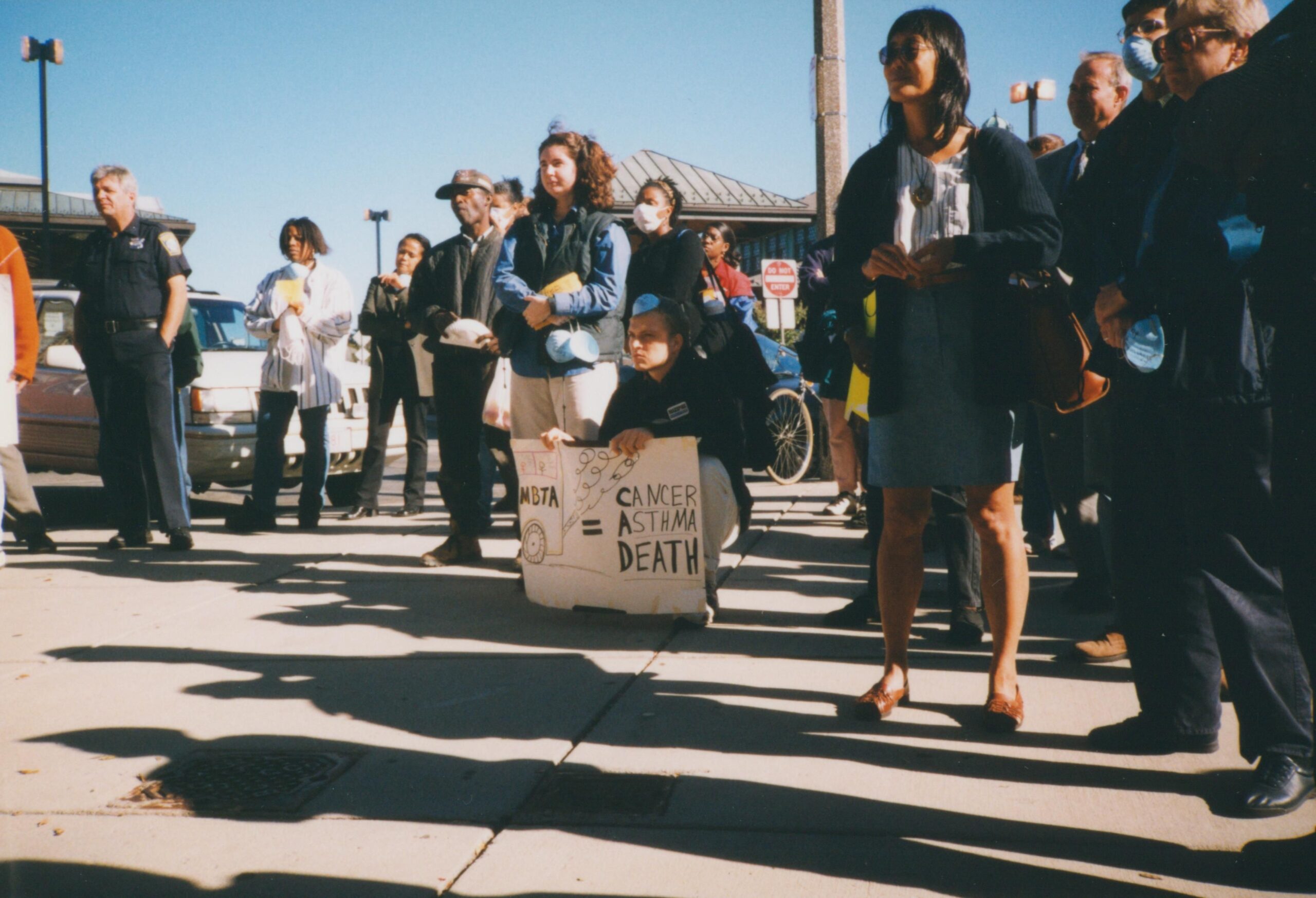
The Big Dig, a major infrastructure project that aimed to improve traffic flow, dominated the Boston area throughout its construction for 15 years and led to countless articles and columns in the Boston Globe. Former Globe reporters and editors Tom Palmer and Sean Murphy, who both worked at the newspaper for over 30 years, donated their extensive records to the Northeastern University Archives and Special Collections, providing a glimpse into the planning and construction of the Big Dig project. (NUASC holds multiple other collections relating to the Big Dig, as well.)

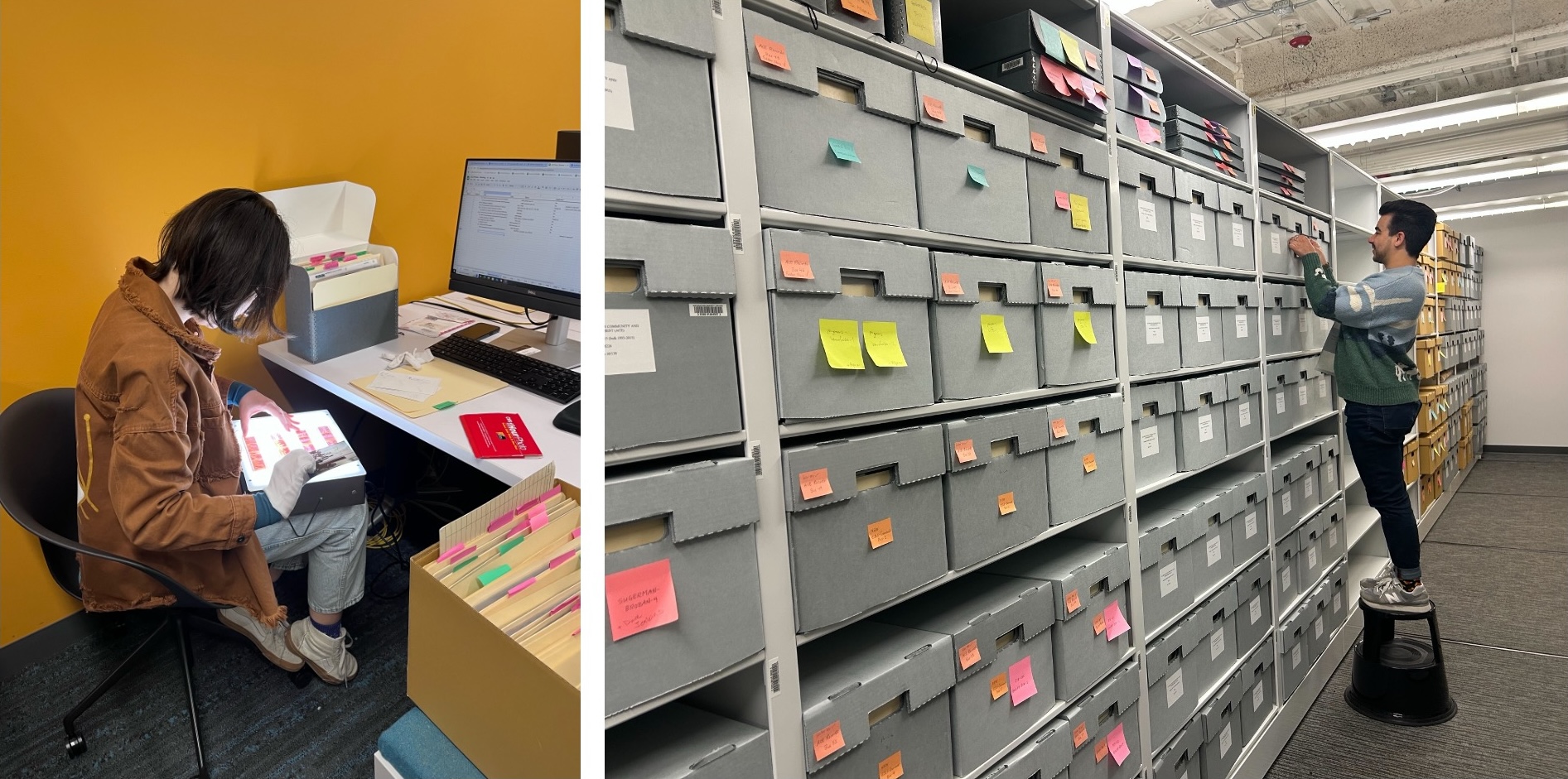
Aries Peralta, wearing a black jacket, gray baseball cap, and glasses, pulls a box off a shelf in the archives
Aries Peralta works in the Archives and Special Collections. Photo courtesy of Molly Brown

The initial planning of the Big Dig, officially named the Central Artery/Tunnel Project, began in 1982 and actual construction occurred from 1991-2006. The donated records contained articles by both Palmer and Murphy, as well as a third reporter, Charles Sennott.

I find this collection interesting because it is not just a compilation of articles published in the Boston Globe; it consists of the research and reference materials amassed for use in reporting on the issues surrounding the Big Dig. The records reveal the vast context and information a journalist would need to know in order to write cohesive articles, including contracts, technical reports, financial statements, photographs, maps, articles from other news sources, and more.

Below are some selected items to highlight the extent of the collection.

Big Dig Contract Map

Map of Boston with different colored lines representing streets and highways. Various area are labeled with contract numbers


The contracts in progress map is a snapshot of the various contracts happening at one time in downtown Boston and serves as a great visualization of the contracts’ physical locations. It also helps associate the technical contract number with the more publicly known name of any given section of the project, such as the Ted Williams Tunnel identified as contract number C07A1.

The Big Dig Blame Game

Illustrated graphic of a man standing behind a podium, with the neck and tongue of a snake. He is holding a megaphone and is surrounded by a red curtain and creepy clowns driving bumper cars, one of which is holding a shovel. A yellow banner at the top reads "The BIG Dig"


As Massachusetts Governor from 1997-2001, Paul Cellucci was the subject of countless voiced opinions about his tenure and leadership during the Big Dig project. This image of Cellucci as a snake accompanied an article published in a 2000 issue of Boston Magazine that suggested cost overruns were caused by a collective failure of key players, including Cellucci, for not properly managing the project.

A Fifth-Grader’s Opinion on the Big Dig

A piece of notebook paper with a letter written in a child's handwriting: "9/15/97 Dear Globe, I've never seen the big dig but I think it should help Boston. It is horrible traffic in Boston. If the big dig dosn't help it will seem like a wast of 10 billion dollars. Joey LeBlanc Medfield Ma. Dale St. School Grade 5"


Often stuck in traffic with their parents or simply by living in nearby neighborhoods, local students were also affected by the Big Dig project. The Student Newsline section in the Boston Globe presented an opportunity for students to send in their own opinions about the project. Many students offered their own ideas to quickly finish and reduce the costs of the project.

2006 Ceiling Collapse

A gloved hand holds a tape measure to a concrete ceiling, measuring the length of screws sticking down.
A worker stands in a crawlspace above the ceiling of a tunnel, surrounded by concrete and bars.


Reporting on the construction of the Big Dig included documenting tragedies. In 2006, a ceiling panel fell on a car in the Fort Point Channel Tunnel, killing a passenger and injuring the driver. Their family and the public wanted answers as to how the incident could have occurred. As a result, the Boston Globe undertook an in-depth investigation to report and provide answers. These photographs may have been taken to document the other ceiling panels in the rest of the tunnel after the accident occurred.

To learn more about accessing the Boston Globe Big Dig records, email the Northeastern University Archives and Special Collections at archives@northeastern.edu.

Aries Peralta (he/him) recently graduated from Simmons University with an MS in Library and Information Science with a concentration in archives management. He received his BA in history from the University of Connecticut.
Issue and Inquiry and Urban Confrontation: Two Radio Programs Covering Urban Issues in Uncertain Times

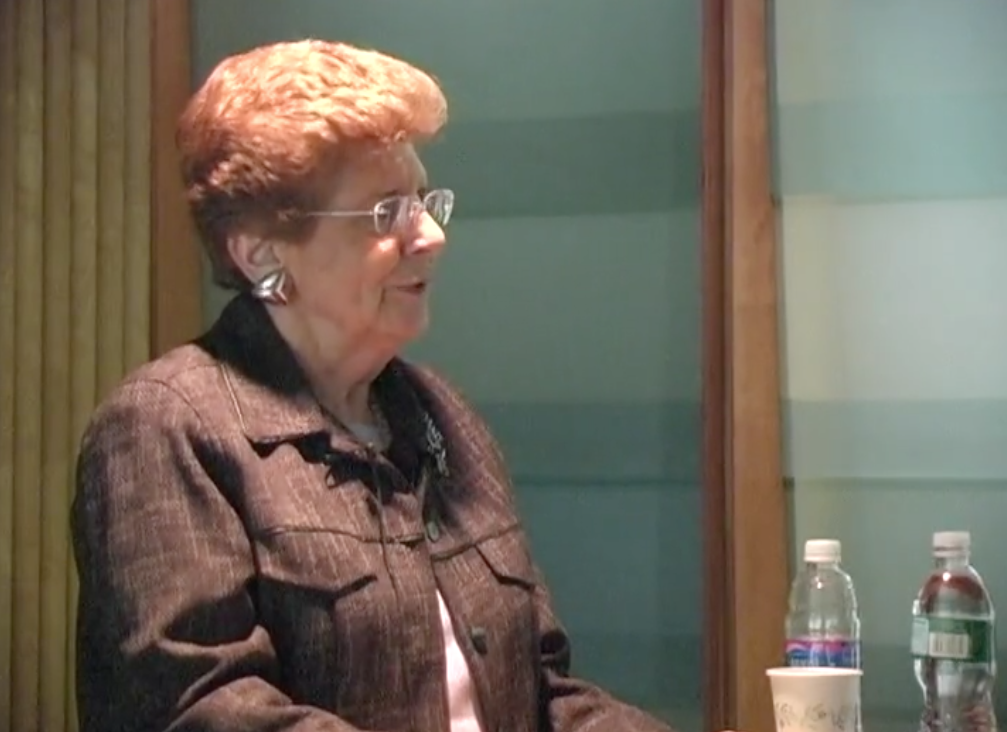
Two radio program collections available in the Digital Repository Service (DRS) — Issue and Inquiry and Urban Confrontation — document social progress and unrelenting difficulties within American cities in 1970-71. Airing on Northeastern University’s radio station WRBB, the programs were produced the university’s now-defunct Division of Instructional Communication. (Urban Confrontation noted that it ended in 1971 for financial reasons.)

Black and white image of two students sitting in a recording studio. They are wearing headphones and sitting at a table while surrounded by 1960s-era recording equipment
Students working in the WRBB (then WNEU) radio station in 1969. Photo courtesy of Northeastern University Archives and Special Collections.

Episodes were primarily hosted by Joseph R. Baylor and feature interviewees from across the United States discussing wide-ranging topics. From the threat of nuclear warfare to the farm labor rights movement, from the “longhair” youth subculture to de-facto school segregation, these episodes present a sweeping view of both common anxieties and optimistic ideas about the future of city life.

As a metadata assistant in Digital Production Services, I performed a survey of the episodes and their associated metadata records. This helped me understand how descriptive information should appear in the DRS. For example, I investigated how titles, creators, subjects, and abstracts should be recorded for each episode. Next, I created an editing plan, performed batch edits, and carefully listened to each episode. As I listened, I recorded accurate information about the episodes so it could be updated in the DRS.

I selected two interesting episodes to highlight here, but be sure to check out the full collection for more episodes.

Oil in Santa Barbara: The Pollution Tragedy (Issue and Inquiry, Episode 10)

In this episode from 1970, Al Weingand, Bob Solan, and Dick Smith discuss a Union Oil offshore drilling well explosion that occurred on January 28, 1969, expelling two million gallons of uncontrolled oil into Santa Barbara Channel off the coast of California. Topics include the oil’s effect on tourism, local economy, wildlife, fishing, and environmental safety concerns.

Weingand, a Santa Barbara resident and former California legislative member, explains that no other disasters can compare to the devastation of the oil pollution. Smith, a reporter for the Santa Barbara News Press, calls for greater investment in tourist value of beaches, saying that offshore oil well spills are dangerous both environmentally and economically. Solan, another reporter for the News Press, covers the psychological benefits of beautiful surroundings for Santa Barbara residents.

This episode was produced in a time of evolving standards for environmental safety and presents an intimate view of lives affected by oil pollution.

Afro-American Culture: The Black Artist Unchained (Urban Confrontation, Episode 11)

“The business that I am about is resurrecting that dormant conscious pride that Black people have had and should have.” — Elma Lewis (4:57)

In this episode, airing in 1970, arts educator and activist Elma Lewis discusses the intertwined histories of Black labor and Black cultural impact in America. She speaks critically of modern art because she says it lacks a basis in life experience. This, Lewis explains, is why Black contributions to American culture transcend art and extend to labor and life experience, which has formed the basis of American society. Throughout the program, Baylor asks Lewis to respond to common racist comments about Black culture. Despite Baylor’s insistence that Lewis speak to his white audience, she intentionally denies this request. Laughing, she replies, “I don’t answer nonsense. I’m not in the business of answering nonsense.”

For more information on Elma Lewis, explore the DRS. More materials from the Elma Lewis collections (Elma Ina Lewis papers, Elma Lewis School of Fine Arts records) are expected to be available in the DRS in 2026.

I wanted to highlight these two episodes because they made me think deeply about both everyday problems and large socio-political injustices which continue to affect us today. “Oil in Santa Barbara” presents opinions from concerned community members in California. It focuses on their reaction to environmental pollution, showing common anxieties about business success, health, and the beauty of their local natural environment. By contrast, “Afro-American Culture” features distinguished Black arts educator Elma Lewis. She discusses fine arts movements, while also celebrating Black joy and artistry in the face of wide-scale systemic racism.

I greatly enjoyed the opportunity to help make these shows available in the DRS. Both Issue and Inquiry and Urban Confrontation hold potential research value for those interested in viewing snapshots of American life in the early 1970s.

Chelsea McNeil served as a part-time metadata assistant in Digital Production Services.

Reading Challenge Update: June Winner and July Preview

The June Reading Challenge winner is Sam Nussbaum at Northeastern’s Seattle campus! Congratulations to Sam, who won a gift card to the Elliott Bay Book Company, a historic independent bookstore based in Seattle’s Capitol Hill district.

And a huge congratulations to everyone who read a Reading Challenge book in June! To be eligible for the prize drawing, make sure to read a book that fits the month’s theme and then tell us about it. In June, we asked you to read a story of resistance. Here are some of the books you read this month! (Comments may have been edited for length or clarity.)

What You Read in June

Cover of The Lilac People

The Lilac People: A Novel, Milo Todd
Listen to the audiobook

“A good read. Heart wrenching for sure. I would have liked an author’s note at the end about which (if any) aspects of the story are real, as with other historical fiction. A story of resistance, for sure, and a reminder to stand up early and often.” — Jodi

Cover of Parable of the Sower

Parable of the Sower, Octavia E. Butler
Find it at Snell Library | Find it at F.W. Olin Library | Read the e-book | Listen to the audiobook

“I’m kicking myself for not reading this sooner! American society is rapidly collapsing and the narrator is trying to find a better way to live than just surviving. She fights against the collapse by attempting to build a religion and a new kind of community. It’s engaging and harrowing, and somehow incredibly relevant, even now, 30 years after it was originally published.” — Sarah

Cover of Mistborn

Mistborn, Brandon Sanderson
Read the e-book

“Incredible world building, interesting characters, fascinating magic system. It’s easy to see why Sanderson is so acclaimed.” — Arjun


Cover of The Dream Hotel

The Dream Hotel, Laila Lalami
Listen to the audiobook

“Set in a near-future world where dreams are monitored by the government, The Dream House follows Sara Hussein, whose private thoughts suddenly make her a national threat. The writing is clear, gripping, and emotionally resonant, weaving together themes of surveillance, identity, and freedom in a way that feels all to real. It’s both a page-turner and a wake-up call — chilling, thought-provoking, and beautifully written.” — Sandy

Cover of Most Ardently

Most Ardently: A Pride & Prejudice Remix, Gabe Cole Novoa
Find it at Snell Library

“This is part of the Remixed Classics series, which reframes classic works of literature to center marginalized identities. Here, the main character is a trans boy named Oliver, who struggles to find ways to live as his true self in a world where he is relentlessly misgendered and pressured to become a wife. This version stays true to the original’s happy ending, and it’s so heartwarming to see Oliver and Darcy find each other.” — Amanda

Suggested Reads for July

This July, we challenge you to read a book of essays, poetry, or short stories. Check out our recommended e-book and audiobook titles in Libby, or stop by the Snell Library lobby from 1-3 p.m. on Wednesday, July 16, and Thursday, July 17, to browse print books and pick up Reading Challenge swag!

Cover of You Like it Darker

You Like it Darker: Stories, Stephen King
Find it at Snell Library | Read the e-book

“You like it darker? Fine, so do I,” writes Stephen King in the afterword to this collection of 12 stories. King is a master of the form, and these stories are as rich and riveting as his novels, both weighty in theme and a huge pleasure to read. King writes to feel “the exhilaration of leaving ordinary day-to-day life behind,” and in You Like it Darker, readers will feel that exhilaration too, again and again.

Cover of Waiting for the Long Night Moon

Waiting for the Long Night Moon, Amanda Peters
Listen to the audiobook

In this intimate collection, Amanda Peters melds traditional storytelling with beautiful, spare prose to describe the dignity of the traditional way of life, the humiliations of systemic racism, and the resilient power to endure. At times sad, sometimes disturbing, but always redemptive, the stories in Waiting for the Long Night Moon will remind you that where there is grief, there is also joy; where there is trauma, there is resilience, and most importantly, there is power.

Cover of Knife

Knife: Meditations After an Attempted Murder, Salman Rushdie
Listen to the audiobook

On the morning of August 12, 2022, Salman Rushdie was standing onstage at the Chautauqua Institution when a man in black rushed down the aisle toward him, wielding a knife. His first thought: So it’s you. Here you are. What followed was a horrific act of violence that shook the literary world and beyond. Now, for the first time, Rushdie relives the traumatic events of that day and its aftermath. Knife is Rushdie at the peak of his powers, writing with urgency, gravity, and unflinching honesty. It is also a deeply moving reminder of literature’s capacity to make sense of the unthinkable, an intimate and life-affirming meditation on life, loss, love, art — and finding the strength to stand up again.

Cover of How to Communicate

How to Communicate: Poems, John Lee Clark
Read the e-book

Deafblind poet John Lee Clark pivots from inventive forms inspired by the Braille slate to sensuous prose poems to incisive erasures that find new narratives in 19th-century poetry. Calling out the limitations of the literary canon, Clark includes path-breaking translations from American Sign Language and Protactile, a language built on touch. How to Communicate embraces new linguistic possibilities that emanate from Clark’s unique perspective and his connection to an expanding, inclusive activist community. Counteracting the assumptions of the sighted and hearing world with humor and grace, Clark finds beauty in the revelations of communicating through touch: “All things living and dead cry out to me / when I touch them.”

Cover of Never Whistle at Night

Never Whistle at Night: An Indigenous Dark Fiction Anthology, Shane Hawk and Theodore C. Van Alst Jr., eds
Find it at Snell Library | Find it at F.W. Olin Library | Listen to the audiobook

Many Indigenous people believe that one should never whistle at night. This belief takes many forms, but what all these legends hold in common is the certainty that whistling at night can cause evil spirits to appear — and even follow you home. These wholly original and shiver-inducing tales introduce readers to ghosts, curses, hauntings, monstrous creatures, complex family legacies, desperate deeds, and chilling acts of revenge. These stories are a celebration of Indigenous peoples’ survival and imagination, and a glorious reveling in all the things an ill-advised whistle might summon.

Whatever you read, make sure to tell us about it to enter the July prize drawing. Good luck, and happy reading!


Deep-Diving Personal Passions at the Library

Poster of Hamilton the musical

I’ve always believed that libraries are not just repositories of books, but also vibrant spaces for discovery, creativity, and connection. Whether you’re collaborating on group projects, diving into specialized research, or simply looking for your next favorite read, as a Library Ambassador, I hope to help you make the most of our library’s extensive resources.

Outside of my academic life, I am a fan of musicals. Over the years, I’ve immersed myself in shows ranging from the classic Phantom of the Opera to the modern MJ. However, one of the most noteworthy Broadway blockbusters in recent years is Hamilton (available to stream through the library). After watching this spectacular musical — a show that fuses hip-hop, jazz, R&B, and Broadway flair — I found myself captivated by the real historical figure of Alexander Hamilton. The musical beautifully highlights his ambition, intellect, and relentless drive.

Yet, it left me wanting to know more about the man beyond the stage. This curiosity led me to delve into Alexander Hamilton, a comprehensive biography by Ron Chernow, that I’m excited to recommend to you today.

Book Recommendation: Alexander Hamilton by Ron Chernow

Cover of Alexander Hamilton by Ron Chernow

Ron Chernow’s Alexander Hamilton meticulously chronicles Hamilton’s life story, from his humble origins in the Caribbean to his meteoric rise as an influential Founding Father of the United States. Spanning his time as George Washington’s right-hand man during the Revolutionary War, his role in shaping America’s financial system as the first Secretary of the Treasury, and his complex personal relationships, Chernow lays out Hamilton’s life with both impressive detail and narrative flair.

One of the most striking aspects is the breadth of historical context provided: Chernow not only profiles Hamilton, but also brings key figures like Aaron Burr, Thomas Jefferson, and James Madison into sharp focus. This broader look at the era helps readers appreciate the magnitude of Hamilton’s achievements and the nuanced political environment in which he operated.

If you’ve seen the musical, you likely already know some of the highlights: Hamilton’s fearless spirit; his tumultuous personal life; and his electrifying duel with Aaron Burr. However, Chernow’s work goes well beyond the theatrical adaptation. The biography delves deeper into Hamilton’s early life on St. Croix, his self-taught brilliance, and the full scope of his writing — elements that are difficult to capture fully in a stage production. While the musical portrays Hamilton as impulsive yet visionary, Chernow’s account provides ample evidence of his calculated strategies, his sharp legal mind, and his extensive contributions to The Federalist Papers.

You’ll also discover complexities in his relationships that a two-and-a-half-hour show can only hint at. This includes the intricate dynamics with his wife, Eliza Schuyler Hamilton, and the lasting emotional toll of his son’s death. Furthermore, the book sheds light on Hamilton’s lengthy political disputes, such as his clash with Jeffersonian Republicans, painting a multifaceted portrait of a man whose passion for country both uplifted and, at times, undercut his influence.

Chernow’s approach to storytelling ensures that you’re not only informed about Hamilton’s achievements but also engaged with the era’s cultural and political nuances. By the time you finish, you’ll grasp just how influential Hamilton was in shaping America’s governance — and how the threads of his life are woven into the national tapestry. The musical may have brought Alexander Hamilton into the cultural spotlight, but this biography cements him as a fascinating, if sometimes controversial, historical figure whose legacy deserves our ongoing attention.

Where to Find the Book

If you’re intrigued and ready to dive deeper into the life of this remarkable statesman, head over to the library’s website and use Scholar OneSearch to find the title, which Huskies can read electronically (or, if you’re on the Oakland campus, physically through the F.W. Olin Library).

In the spirit of Hamilton’s famous line, “I’m not throwing away my shot,” I encourage you not to miss out on either the musical or this immersive biography.

Reading Challenge Update: May Winner and June Preview

The May Reading Challenge winner is Bianca Gallagher! Congratulations to Bianca and to everyone else who read a Reading Challenge book in May.

To be eligible for a prize drawing, make sure to read a book that fits the month’s theme and then tell us about it. In May, we asked you to read a book about your hometown or local area. Here are some of the books you read this month! (Comments may have been edited for length or clarity.)

What You Read in May

Cover of Dark Tide

Dark Tide: The Great Boston Molasses Flood of 1919, Stephen Puleo
Find it at Snell Library

“Since there are no books about my tiny hometown in Central Mass., I read one about Boston. I have always been fascinated by the Boston molasses flood but didn’t know much about it. This book provided a thoroughly researched account of what led up to the event, the flood itself, and the aftermath as they tried to figure out who was at fault. In a city teeming with history, the flood is often overlooked or joked about but it was tragedy that took place at a pivotal moment of time in Boston and the country.” — Kerri

Cover of American Pastoral

American Pastoral, Philip Roth
Find it at Snell Library | Find it at F.W. Olin Library

“The New Jersey town name dropping was delightful, and the book was thought-provoking for sure. Wish I’d read an American lit seminar, then maybe I’d understand exactly what he was trying to say about the life and death of the American ideal.” — Jodi


Cover of Exciting Times

Exciting Times: A Novel, Naoise Dolan
Buy it at Bookshop.org

“Set in Hong Kong, which is my hometown! It’s the first book I ever read set there and it was a lot of fun seeing my childhood spaces represented on the page!” — Nobel


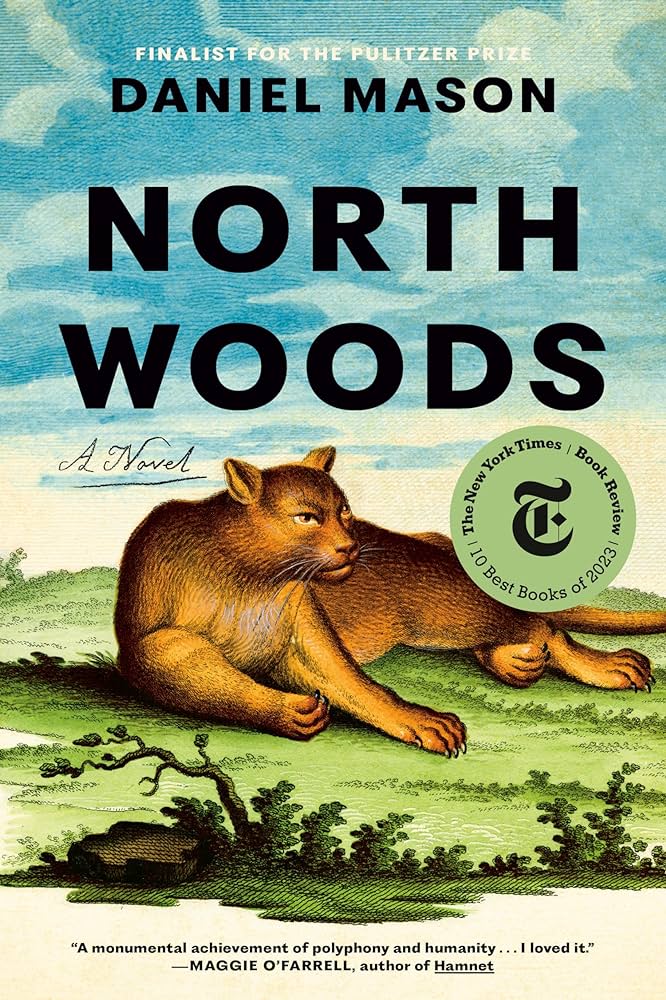
Cover of North Woods

North Woods: A Novel, Daniel Mason
Find it at Snell Library | Read the e-book

“LOVED LOVED LOVED. Reminded me of The Overstory. Made me happy and I wanted to read it. Helped me appreciate and connect with nature. A little technical at times (I had to Google words a lot) but 10/10 recommend.” — Geneva


Suggested Reads for June

In celebration of Pride Month, your June challenge is to read a book that tells a story of resistance. Check out our recommended e-book and audiobook titles in Libby or stop by the Snell Library lobby from 1 – 3 p.m. on June 11 and 12 to browse print books and pick up Reading Challenge swag.

Cover of The Other Olympians

The Other Olympians: Fascism, Queerness, and the Making of Modern Sports, Michael Waters
Find it at F.W. Olin Library | Listen to the audiobook

In December 1935, Zdeněk Koubek, one of the most famous sprinters in European women’s sports, declared he was now living as a man. Around the same time, the celebrated British field athlete Mark Weston, also assigned female at birth, announced that he, too, was a man. Periodicals and radio programs across the world carried the news; both became global celebrities. A few decades later, they were all but forgotten. In The Other Olympians, Michael Waters uncovers, for the first time, the gripping true stories of pioneering trans and intersex athletes. “This riveting audiobook brings all the facts and showcases why we need to acknowledge try history in today’s social climate.” — Book Riot

Cover of Book and Dagger

Book and Dagger: How Scholars and Librarians Became the Unlikely Spies of World War II, Elyse Graham
Listen to the audiobook

At the start of WWII, the U.S. found itself in desperate need of an intelligence agency. The Office of Strategic Services (OSS) was quickly formed—and in an effort to fill its ranks with experts, the OSS turned to academia for recruits. Suddenly, literature professors, librarians, and historians were training to perform undercover operations and investigative work—and these surprising spies would go on to profoundly shape both the course of the war and our cultural institutions. Book and Dagger is an inspiring and gripping true story about a group of academics who helped beat the Nazis—a tale that reveals the incredible power of the humanities to change the world.

Cover of By the Fire We Carry

By the Fire We Carry: The Generations-Long Fight for Justice on Native Land, Rebecca Nagle
Listen to the audiobook

Before 2020, American Indian reservations made up roughly 55 million acres of land in the United States. In the 1830s, Muscogee people were rounded up by the U.S. military at gunpoint and forced to exile halfway across the continent. At the time, they were promised this new land would be theirs for as long as the grass grew and the waters ran. But that promise was not kept. Rebecca Nagle recounts the generations-long fight for tribal land and sovereignty in eastern Oklahoma. By chronicling both the contemporary legal battle and historic acts of Indigenous resistance, By the Fire We Carry stands as a landmark work of American history.

Cover of Marsha

Marsha: The Joy and Defiance of Marsha P. Johnson, Tourmaline
Listen to the audiobook

Rumor has it that after Marsha P. Johnson threw the first brick in the 1969 Stonewall Uprising, she picked up a shard of broken mirror to fix her makeup. Marsha, a legendary Black transgender activist, embodied both the beauty and the struggle of the early gay rights movement. She performed with RuPaul and with the internationally renowned drag troupe The Hot Peaches. She was a muse to countless artists, from Andy Warhol to the band Earth, Wind & Fire. And she continues to inspire people today. Marsha didn’t want to be freed; she declared herself free and told the world to catch up.

Cover of Chain-Gang All-Stars

Chain-Gang All-Stars: A Novel, Nana Kwame Adjei-Brenyah
Find it at Snell Library | Find it at F.W. Olin Library | Listen to the audiobook

Loretta Thurwar and Hamara “Hurricane Staxxx” Stacker are the stars of the Chain-Gang All-Stars, the cornerstone of CAPE, or Criminal Action Penal Entertainment, a highly popular, highly controversial profit-raising program in America’s increasingly dominant private prison industry. It’s the return of the gladiators, and prisoners are competing for the ultimate prize: their freedom. But CAPE’s corporate owners will stop at nothing to protect their status quo. Chain-Gang All-Stars is a kaleidoscopic, excoriating look at the American prison system’s unholy alliance of systemic racism, unchecked capitalism, and mass incarceration.

Whatever you read, make sure to tell us about it to enter the June prize drawing. Good luck, and happy reading!