
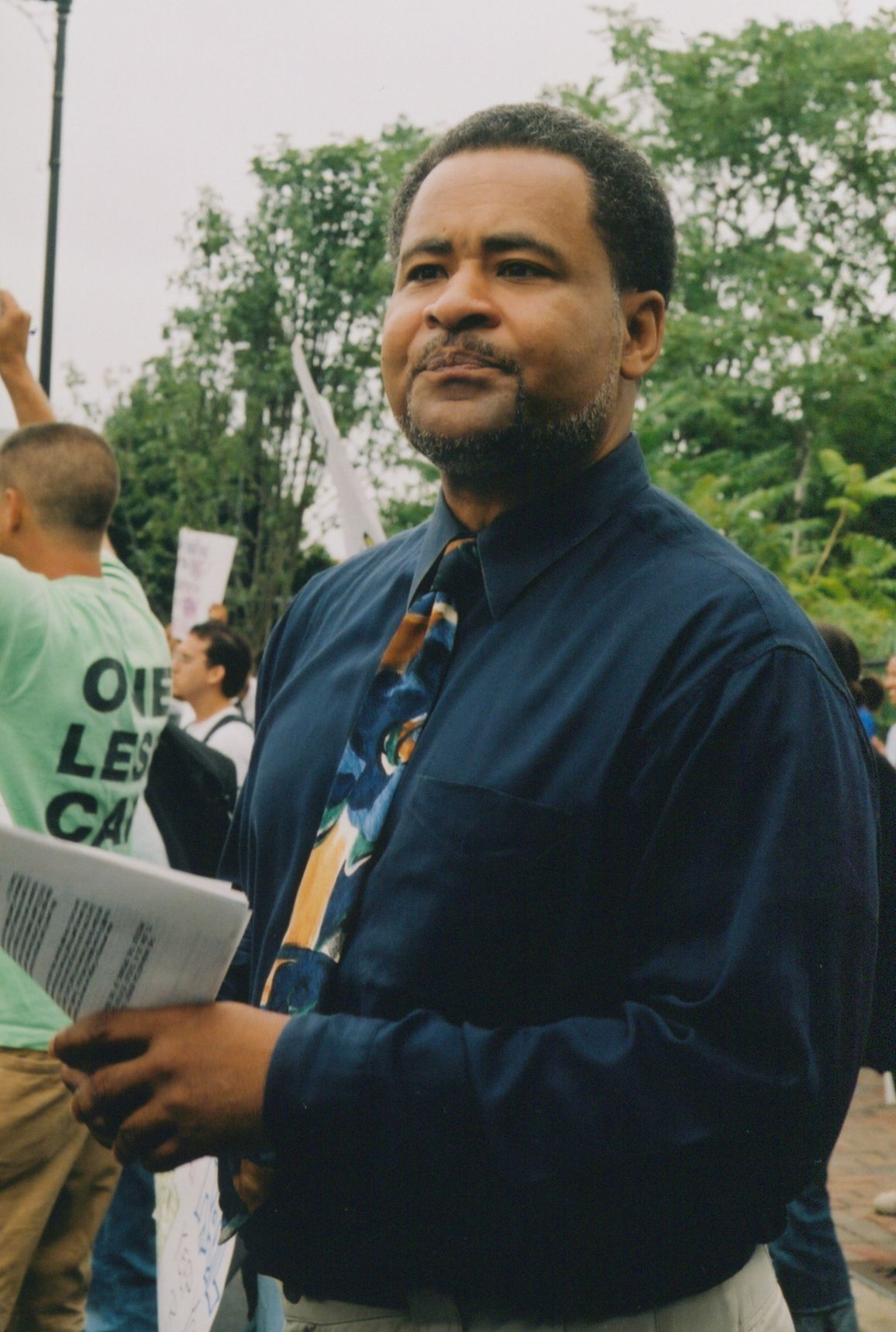
Throughout his life, Bob Terrell played an active role in advancing environmental, housing, and transportation justice in the City of Boston, and advocated for his neighborhood of Roxbury. He was involved in multiple organizations and held several municipal government positions, as well. So when his papers were donated to the Northeastern University Archives and Special Collections upon his passing in 2025, they provided a unique look into the city’s history.
The most prevalent organizations represented in Terrell’s papers are the Roxbury Neighborhood Council (RNC), Greater Roxbury Neighborhood Authority (GRNA), and Washington Street Corridor Coalition (WSCC). The RNC and GRNA sought to increase community control of their neighborhoods through the development of housing, education, and economic opportunities. Meanwhile, the WSCC focused on advocating for adequate public transportation, needed after the loss of the El (the Boston Elevated Railway), which had traveled down Washington Street.
Other records in the collection document the MBTA Rider Oversight Committee, Black Political Task Force, On the Move, and the Massachusetts Community and Banking Council, among other organizations. Terrell often held leadership positions within these organizations such as board member, committee member, director, and executive director.
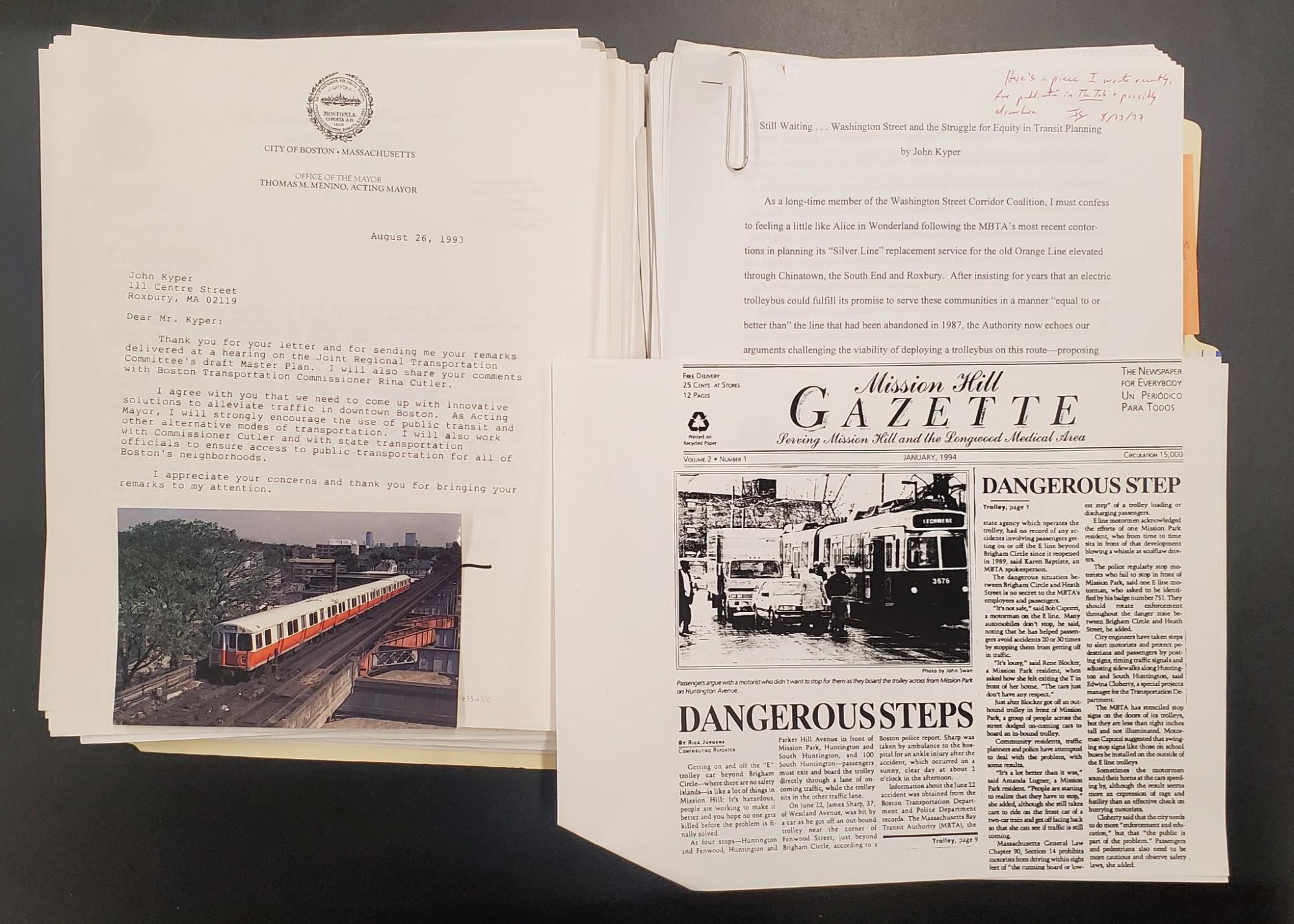
The attention Terrell paid to local and world news related to environmental, housing, and transportation issues is evident in the number of reports, studies, newsletters, and other records that he accumulated over time. As I went through these items, I wondered to what extent global developments and initiatives informed the work he was doing in Boston. I often became engrossed with the interconnectedness of local and larger world matters, especially when news from Boston grew to become world news.
Additional materials in the collection helped me appreciate even more how committee and active Terrell was in his advocacy. Initially, this realization occurred as I went through his educational materials. Terrell received his BA in Government and Sociology from Bowdoin College in 1974. Later in life, he returned to school and received his Master’s in Public Policy from Tufts University in 2012. Terrell kept his notebooks, readings, and other resources from both undergraduate and graduate school. To me, this conveys that Terrell valued the information he learned from his professors and carried it throughout his life, which then impacted the advocacy work he did in his community.
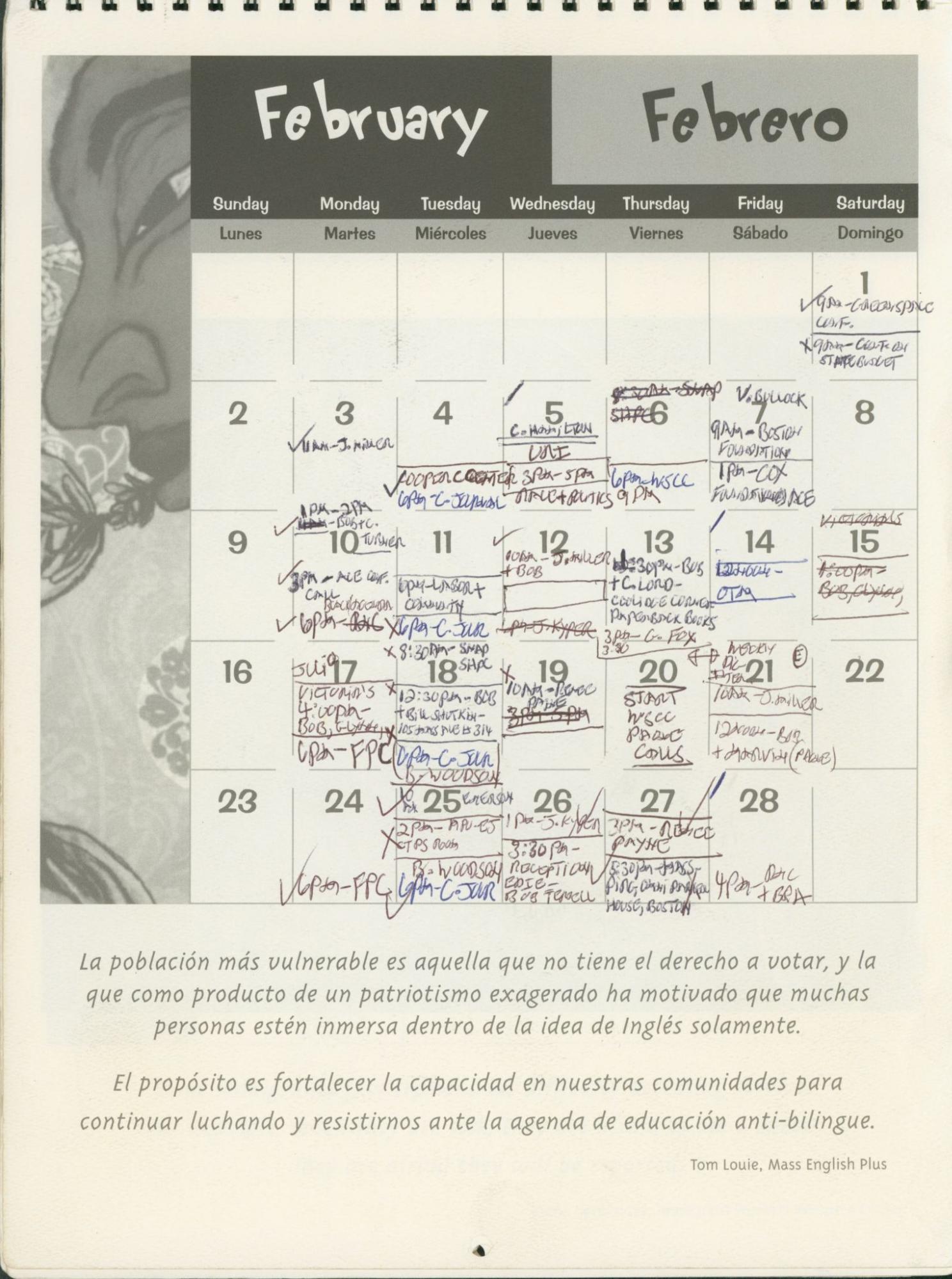
Occasionally, I would also stumble upon his personal calendars. These, too, helped me understand how busy and active he was. In addition to attending conferences relevant to his work, there were organizational meetings to attend. Sometimes the entry in his calendar would even have a location for the event or meeting, which shows how much effort it takes to be so involved, but this was his life’s work and he was committed. It was more surprising to see a free day in his calendar than not. I found the calendars quite inspiring, in seeing how much one person can do. If a person were to only commit to one cause or organization they could still create an impact. This makes me feel a little less intimidated to get involved myself.
If you are interested in local Boston advocacy work, especially in relation to transportation, environmental, and housing justice, Bob Terrell’s papers are a must-see.
Contact the Northeastern University Archives and Special Collections by emailing us at archives@northeastern.edu to find out more about Bob Terrell’s papers.
Former Processing Assistant Aries Peralta (he/him) graduated from Simmons University with an MS in Library and Information Science with a concentration in archives management. He received his BA in art history from the University of Connecticut.