Skip to content

Boston History

Box by Box: Inventorying the Bob Terrell Papers
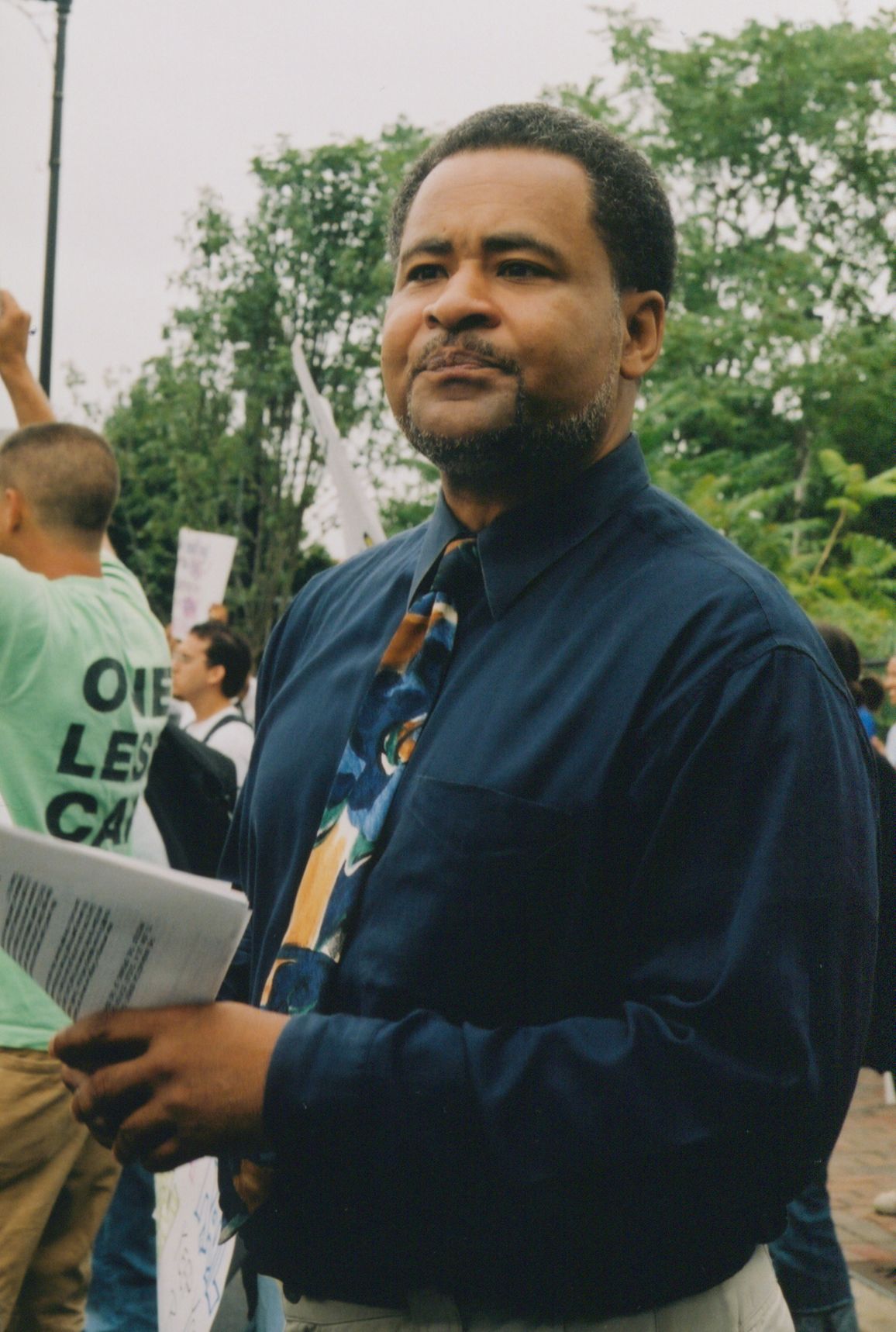
A man stands outside holding papers
Bob Terrell at the MBTA Silver Line opening protest, July 2002. Alternatives for Community and Environment (ACE) records.

Throughout his life, Bob Terrell played an active role in advancing environmental, housing, and transportation justice in the City of Boston, and advocated for his neighborhood of Roxbury. He was involved in multiple organizations and held several municipal government positions, as well. So when his papers were donated to the Northeastern University Archives and Special Collections upon his passing in 2025, they provided a unique look into the city’s history.

The most prevalent organizations represented in Terrell’s papers are the Roxbury Neighborhood Council (RNC), Greater Roxbury Neighborhood Authority (GRNA), and Washington Street Corridor Coalition (WSCC). The RNC and GRNA sought to increase community control of their neighborhoods through the development of housing, education, and economic opportunities. Meanwhile, the WSCC focused on advocating for adequate public transportation, needed after the loss of the El (the Boston Elevated Railway), which had traveled down Washington Street.

Other records in the collection document the MBTA Rider Oversight Committee, Black Political Task Force, On the Move, and the Massachusetts Community and Banking Council, among other organizations. Terrell often held leadership positions within these organizations such as board member, committee member, director, and executive director.
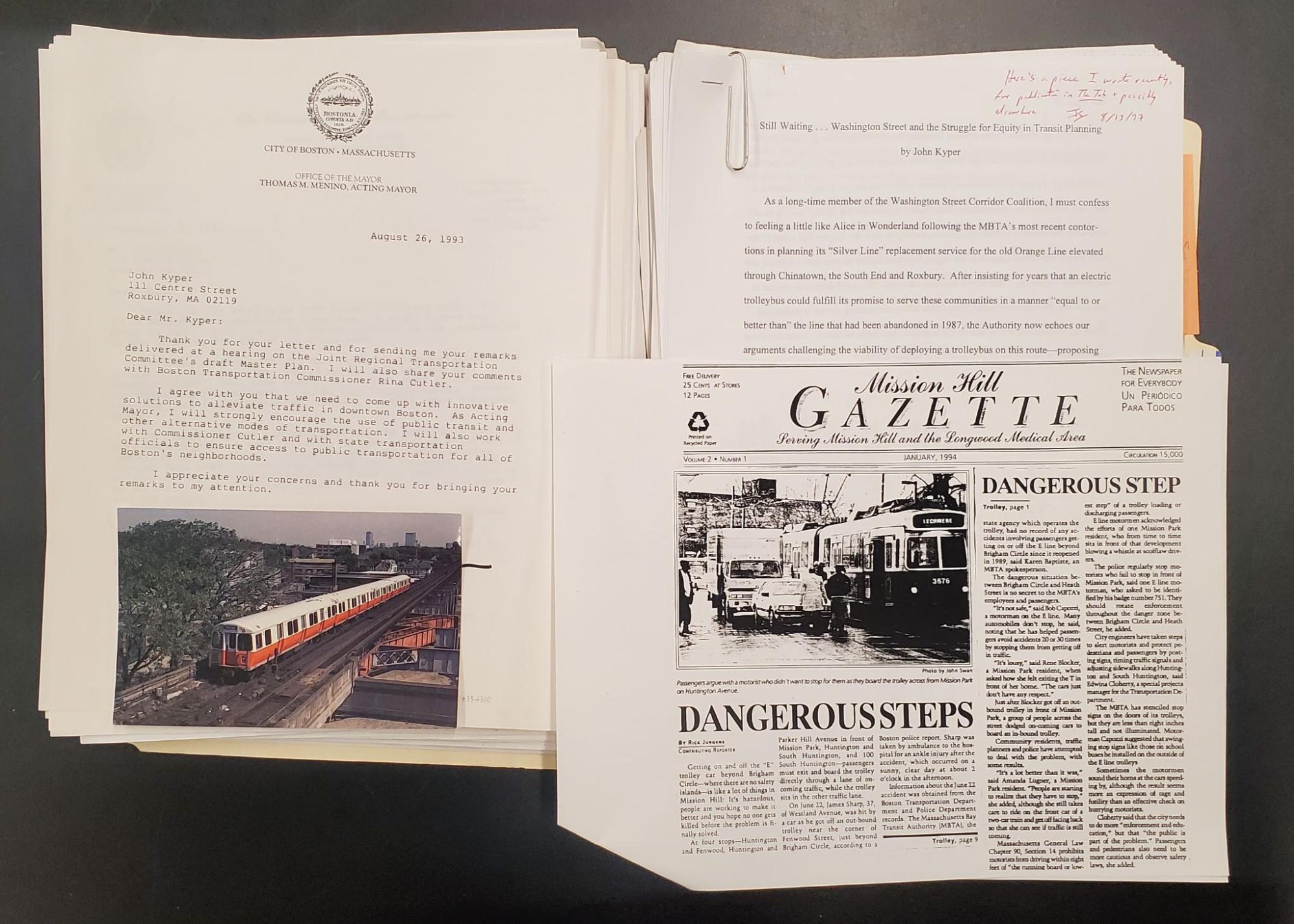
An open file showing letters, newspaper clippings, reports, and photos of the MBTA
Records documenting community concerns about Washington Street and adequate transportation, 1990s. Bob Terrell papers.

The attention Terrell paid to local and world news related to environmental, housing, and transportation issues is evident in the number of reports, studies, newsletters, and other records that he accumulated over time. As I went through these items, I wondered to what extent global developments and initiatives informed the work he was doing in Boston. I often became engrossed with the interconnectedness of local and larger world matters, especially when news from Boston grew to become world news.

Additional materials in the collection helped me appreciate even more how committee and active Terrell was in his advocacy. Initially, this realization occurred as I went through his educational materials. Terrell received his BA in Government and Sociology from Bowdoin College in 1974. Later in life, he returned to school and received his Master’s in Public Policy from Tufts University in 2012. Terrell kept his notebooks, readings, and other resources from both undergraduate and graduate school. To me, this conveys that Terrell valued the information he learned from his professors and carried it throughout his life, which then impacted the advocacy work he did in his community.
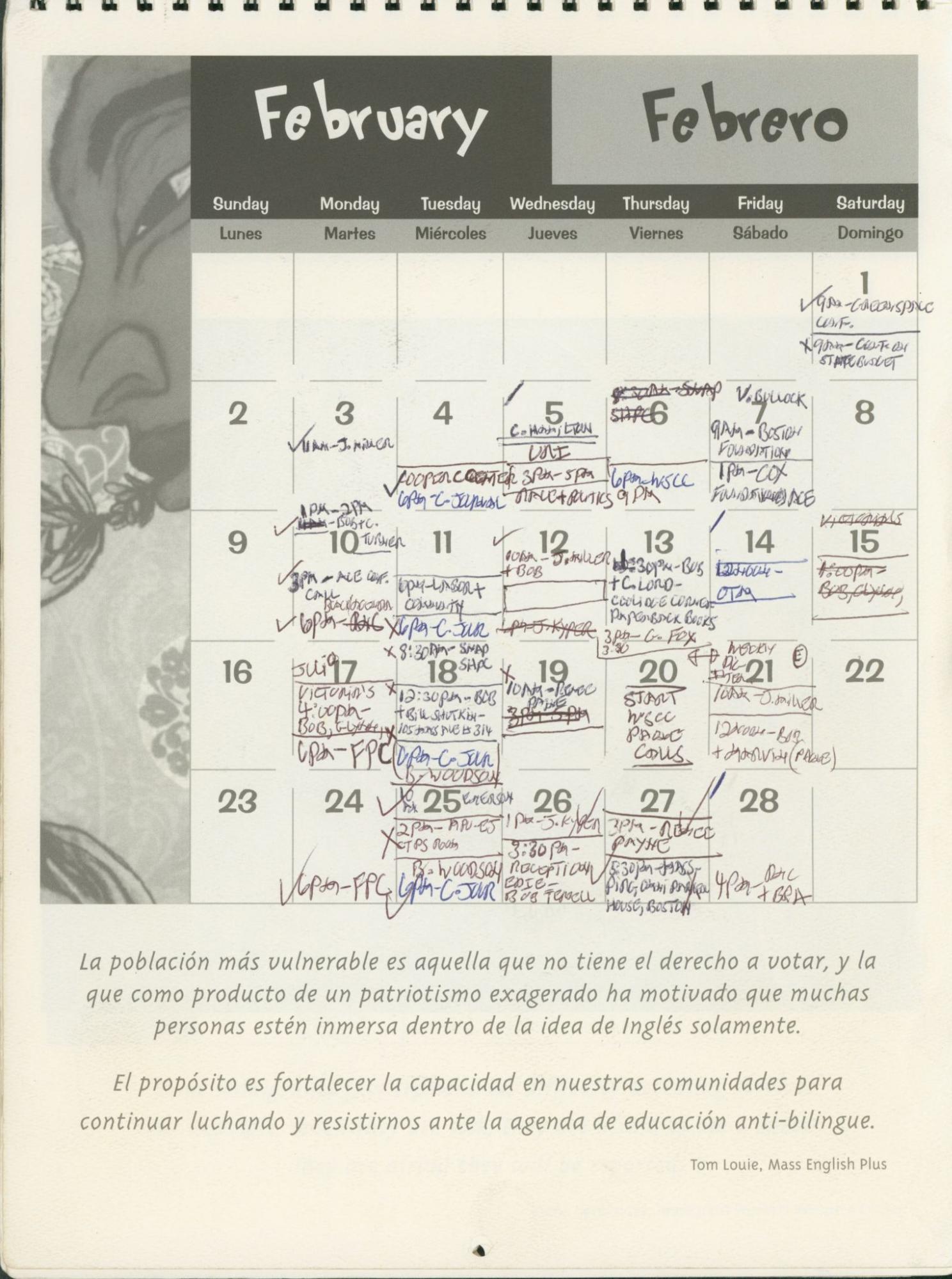
A calendar page for the month of February. Every weekday has a series of entries scribbled
One of the calendars used throughout Bob Terrell’s life. Bob Terrell papers.

Occasionally, I would also stumble upon his personal calendars. These, too, helped me understand how busy and active he was. In addition to attending conferences relevant to his work, there were organizational meetings to attend. Sometimes the entry in his calendar would even have a location for the event or meeting, which shows how much effort it takes to be so involved, but this was his life’s work and he was committed. It was more surprising to see a free day in his calendar than not. I found the calendars quite inspiring, in seeing how much one person can do. If a person were to only commit to one cause or organization they could still create an impact. This makes me feel a little less intimidated to get involved myself.

If you are interested in local Boston advocacy work, especially in relation to transportation, environmental, and housing justice, Bob Terrell’s papers are a must-see.

Contact the Northeastern University Archives and Special Collections by emailing us at archives@northeastern.edu to find out more about Bob Terrell’s papers.

Former Processing Assistant Aries Peralta (he/him) graduated from Simmons University with an MS in Library and Information Science with a concentration in archives management. He received his BA in art history from the University of Connecticut.
Archives Research Fellowships Available

In 2026, there are two opportunities to receive funding to use the Northeastern University Archives and Special Collections (NUASC) records to aid research and storytelling.

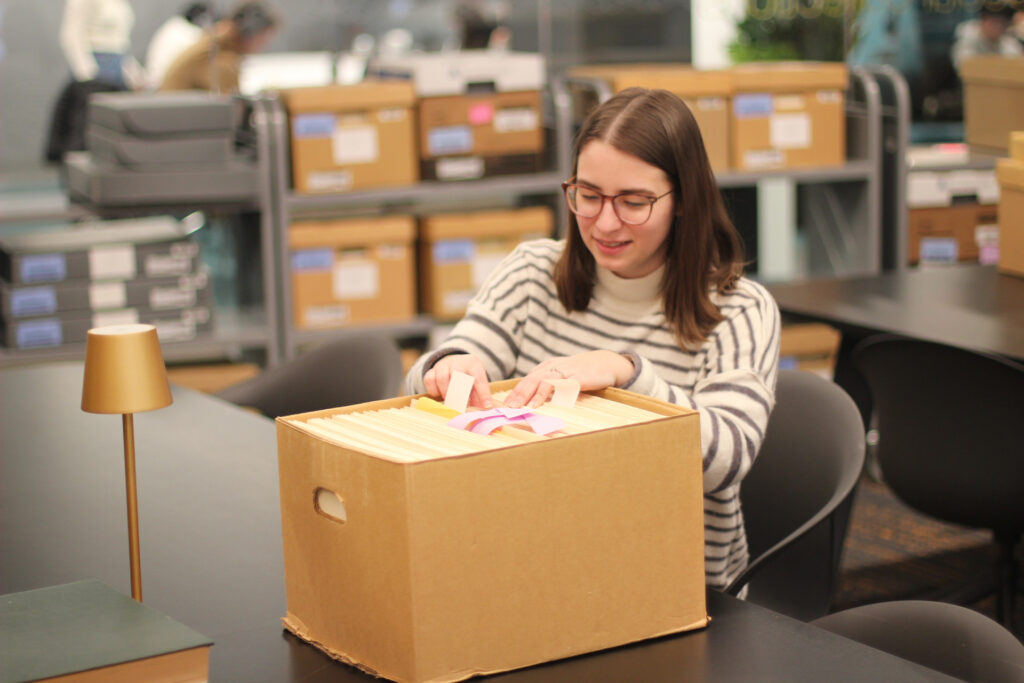
A person sitting at a table in the Snell Library Archives Reading Room flips through files in an archival box. More boxes are in the background.

The New England Regional Fellowship Consortium (NERFC) fellowships provides support for research projects that span across several New England repositories. NERFC is a collaboration of 30 cultural institutions and repositories across New England, including NUASC. The consortium’s fellowship program is designed to promote research across a variety of institutions and metropolitan areas in New England. NERFC grants two dozen awards every year and fellows receive a stipend of $5,000 with the requirement that they conduct their research in at least three of the participating institutions for periods of two weeks each. Applications are due Sunday, February 1, 2026, and can be submitted through NERFC’s homepage on the Massachusetts Historical Society website. Note that there are new adjustments to the NERFC submission process, including contacting an archivist directly to learn more about their collections prior to submitting an application.

The Boston Public Library (BPL) is offering a new fellowship in collaboration with NUASC this year. The “Telling Boston Stories Fellowship” is a four-week program intended to support research projects that focus on the people and communities of Boston that are often left out of the historical narrative. This fellowship can support many types of projects both academic and artistic. Fellows will receive a $4,500 stipend and will be expected to spend four weeks working with collections, primarily at the BPL and Northeastern University, though trips at other Boston cultural heritage institutions or research centers may be included. The weeks do not have to be consecutive. Applications are due Monday, March 23, 2026. To apply, visit the BPL’s fellowship page for more information.

For any questions about this fellowships, using our collections, or what other types of collaborations and research projects are possible, email Molly Brown at mo.brown@northeastern.edu.

Special Collections Featured in ICA Boston Watershed Art Installation

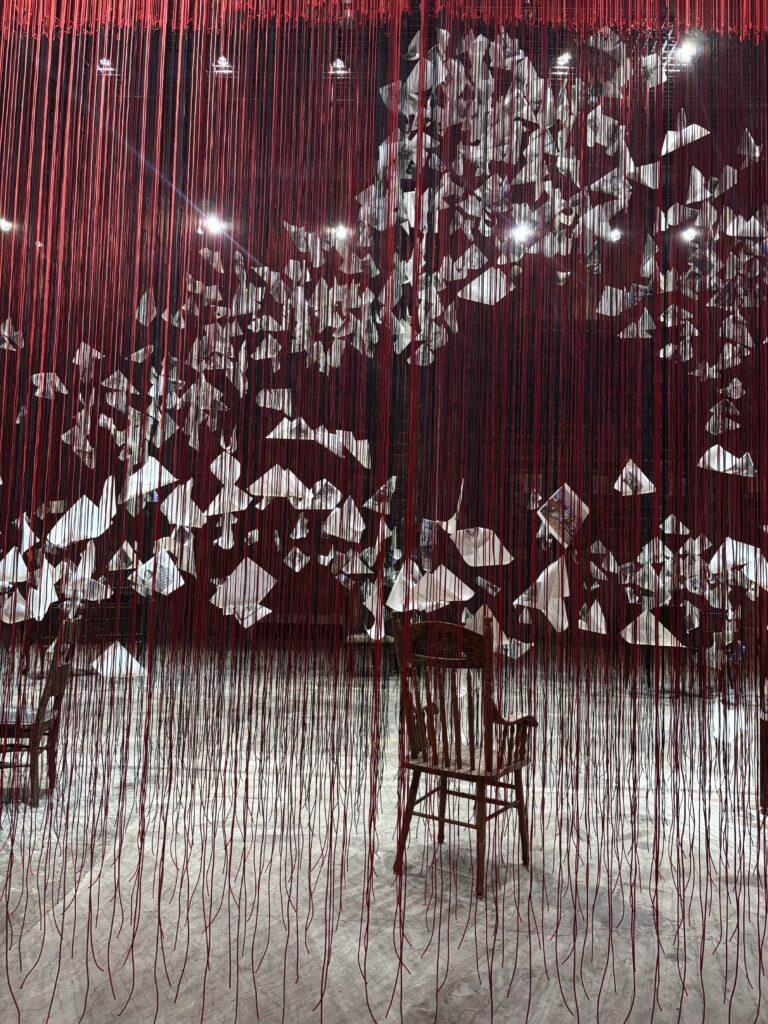
A series of red and black threads hanging from the ceiling with folded papers suspended within. Two chairs also sit within the threads
Chiharu Shiota’s “Home Less Home” exhibit featuring reproductions of materials from the Archives & Special Collections. Photo courtesy of Molly Brown.

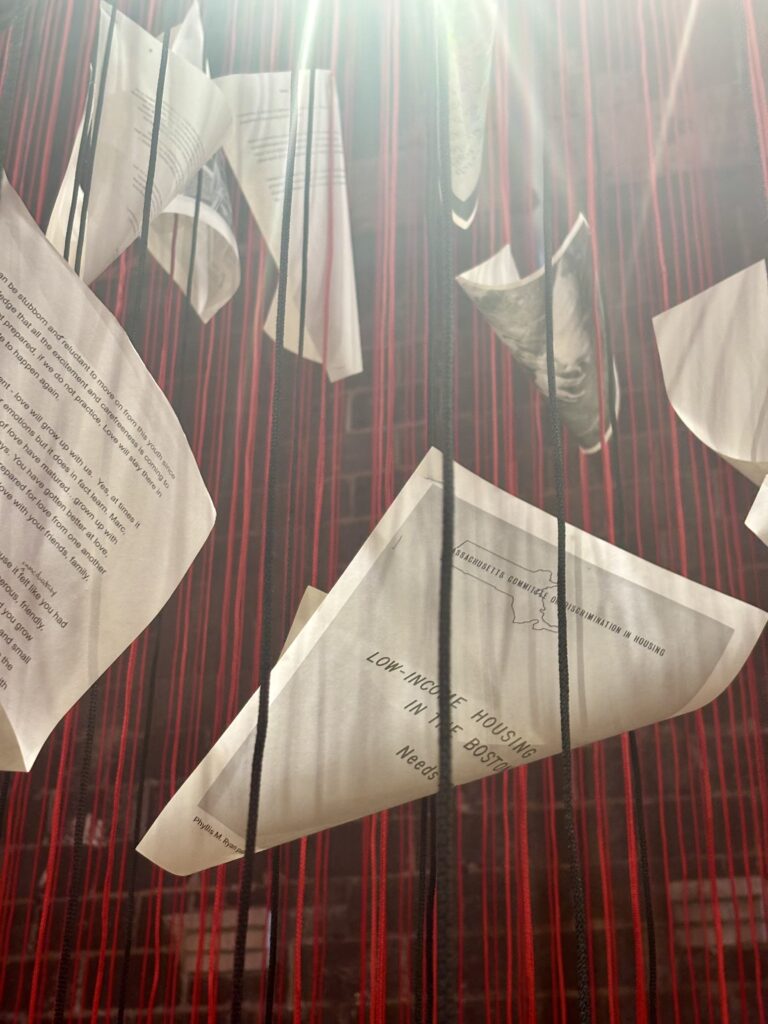
Reproductions from the Northeastern University Archives and Special Collections are featured as a part of artist Chiharu Shiota’s “Home Less Home” exhibit at the Institute of Contemporary Art (ICA) Boston’s Watershed.

The installations will be on display until September 1.

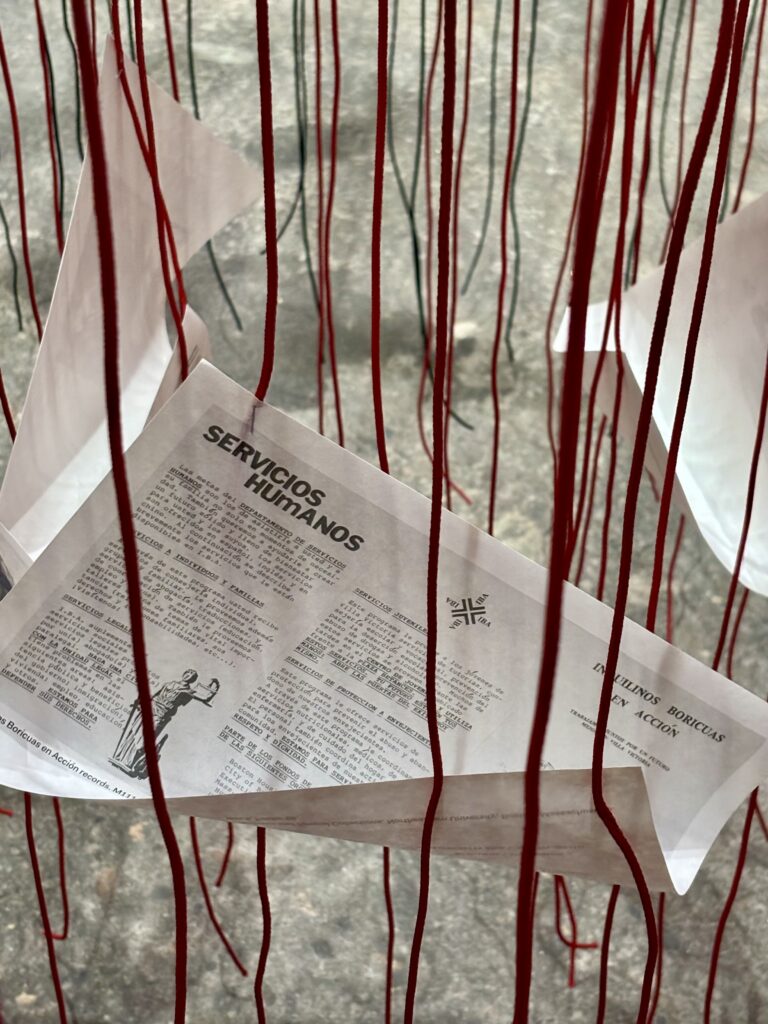
“Home Less Home” creates the shape of a house with many red and black ropes hung from the ceiling. Suspended within the ropes are records of immigration, such as passports and immigration papers. ICA Boston’s iteration of the installation also draws specifically on Boston history, featuring archival records from institutions across the city that speak to the theme of home and the actions around home: finding a home, leaving home, protecting home, and creating a new home.

Northeastern’s archives brought a unique organizational activism component to the exhibit through our Special Collections’ focus on neighborhood social justice movements. Reference staff worked with ICA Boston curators to find records addressing housing activism and advocacy in Boston’s neighborhoods. The exhibit features records from the following collections:

Paper suspended amid red threads reading "Servicios Humanos"
Records from the Inquilinos Boricuas en Acción. Photo courtesy of Molly Brown.
Papers suspended within hanging red threads
Records from the Phyllis Ryan papers. Photo courtesy of Molly Brown.


This installation is Shiota’s first in New England and is featured as part of the Boston Public Art Triennial 2025. Check it out before September 1!

Box By Box: Inventorying the Boston Globe Big Dig Records

The Big Dig, a major infrastructure project that aimed to improve traffic flow, dominated the Boston area throughout its construction for 15 years and led to countless articles and columns in the Boston Globe. Former Globe reporters and editors Tom Palmer and Sean Murphy, who both worked at the newspaper for over 30 years, donated their extensive records to the Northeastern University Archives and Special Collections, providing a glimpse into the planning and construction of the Big Dig project. (NUASC holds multiple other collections relating to the Big Dig, as well.)

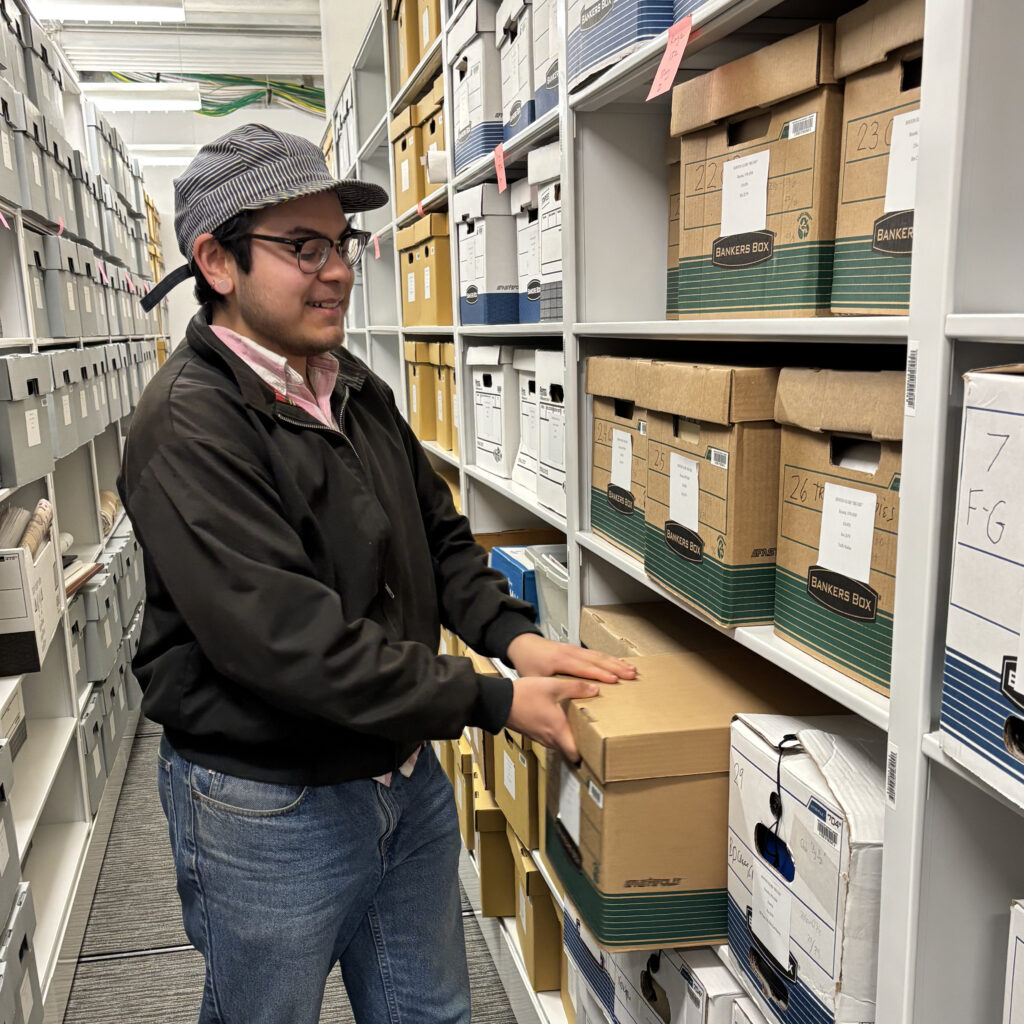
Aries Peralta, wearing a black jacket, gray baseball cap, and glasses, pulls a box off a shelf in the archives
Aries Peralta works in the Archives and Special Collections. Photo courtesy of Molly Brown

The initial planning of the Big Dig, officially named the Central Artery/Tunnel Project, began in 1982 and actual construction occurred from 1991-2006. The donated records contained articles by both Palmer and Murphy, as well as a third reporter, Charles Sennott.

I find this collection interesting because it is not just a compilation of articles published in the Boston Globe; it consists of the research and reference materials amassed for use in reporting on the issues surrounding the Big Dig. The records reveal the vast context and information a journalist would need to know in order to write cohesive articles, including contracts, technical reports, financial statements, photographs, maps, articles from other news sources, and more.

Below are some selected items to highlight the extent of the collection.

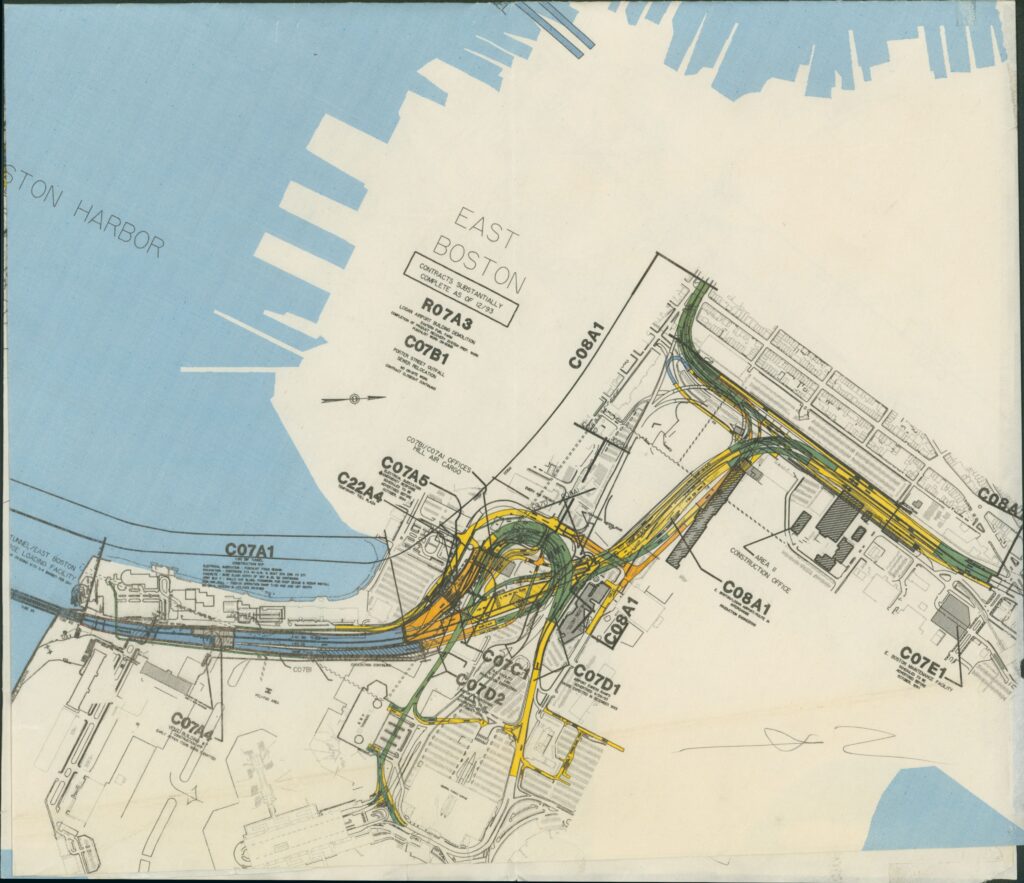
Big Dig Contract Map

Map of Boston with different colored lines representing streets and highways. Various area are labeled with contract numbers


The contracts in progress map is a snapshot of the various contracts happening at one time in downtown Boston and serves as a great visualization of the contracts’ physical locations. It also helps associate the technical contract number with the more publicly known name of any given section of the project, such as the Ted Williams Tunnel identified as contract number C07A1.

The Big Dig Blame Game

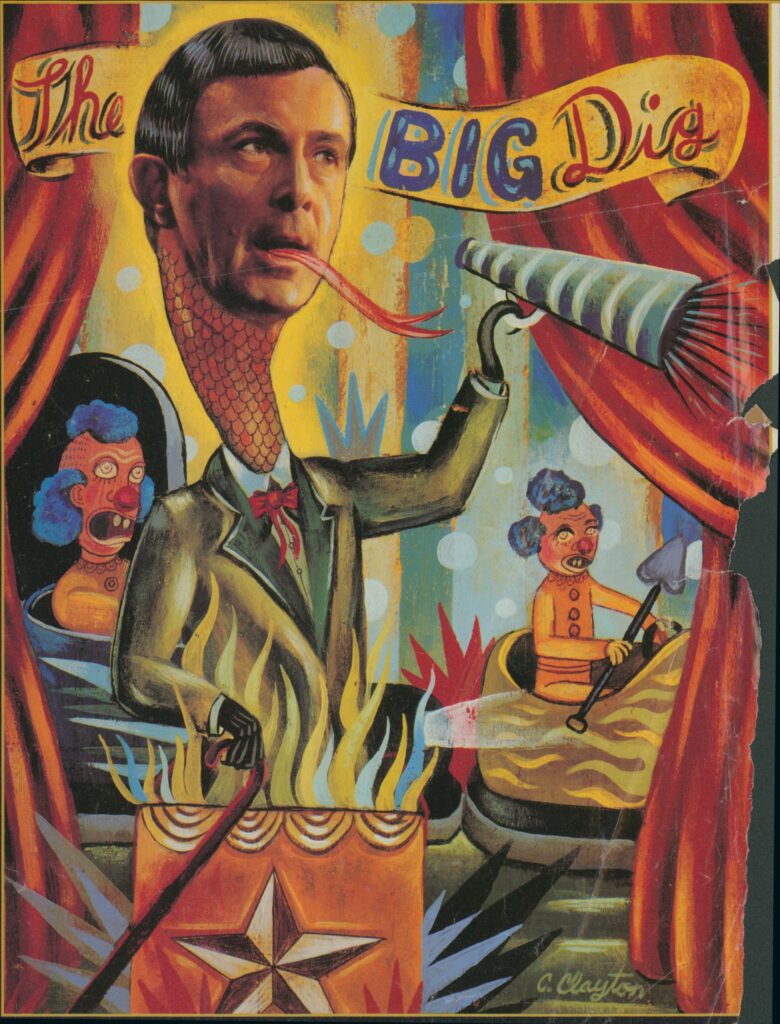
Illustrated graphic of a man standing behind a podium, with the neck and tongue of a snake. He is holding a megaphone and is surrounded by a red curtain and creepy clowns driving bumper cars, one of which is holding a shovel. A yellow banner at the top reads "The BIG Dig"


As Massachusetts Governor from 1997-2001, Paul Cellucci was the subject of countless voiced opinions about his tenure and leadership during the Big Dig project. This image of Cellucci as a snake accompanied an article published in a 2000 issue of Boston Magazine that suggested cost overruns were caused by a collective failure of key players, including Cellucci, for not properly managing the project.

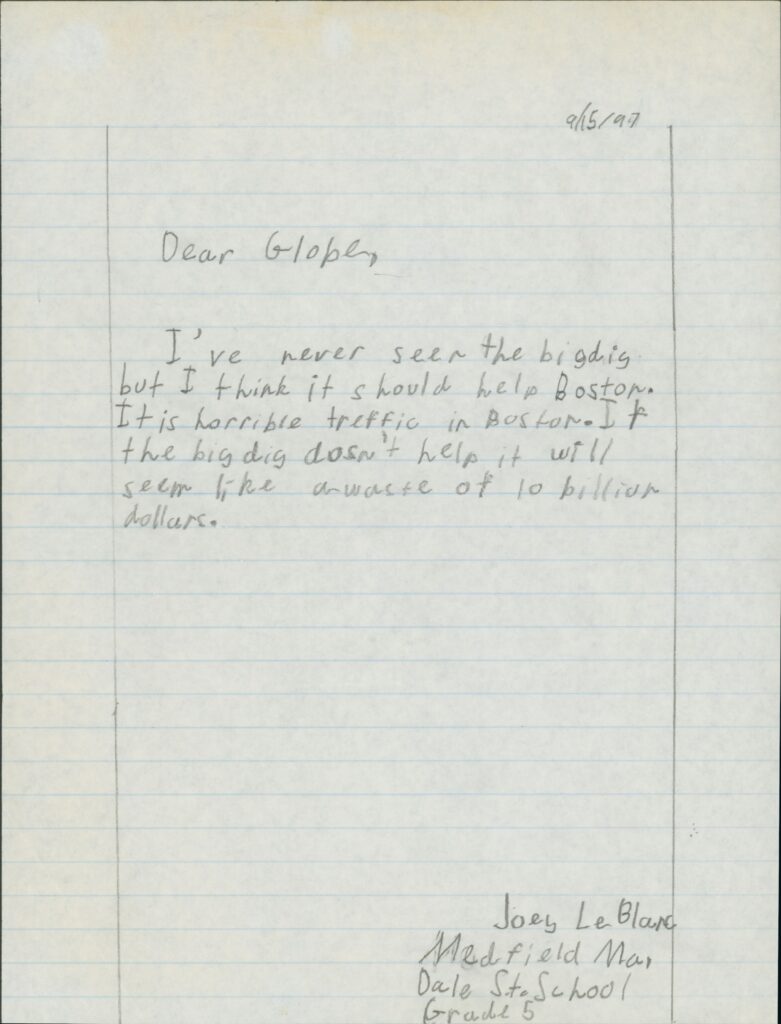
A Fifth-Grader’s Opinion on the Big Dig

A piece of notebook paper with a letter written in a child's handwriting: "9/15/97 Dear Globe, I've never seen the big dig but I think it should help Boston. It is horrible traffic in Boston. If the big dig dosn't help it will seem like a wast of 10 billion dollars. Joey LeBlanc Medfield Ma. Dale St. School Grade 5"


Often stuck in traffic with their parents or simply by living in nearby neighborhoods, local students were also affected by the Big Dig project. The Student Newsline section in the Boston Globe presented an opportunity for students to send in their own opinions about the project. Many students offered their own ideas to quickly finish and reduce the costs of the project.

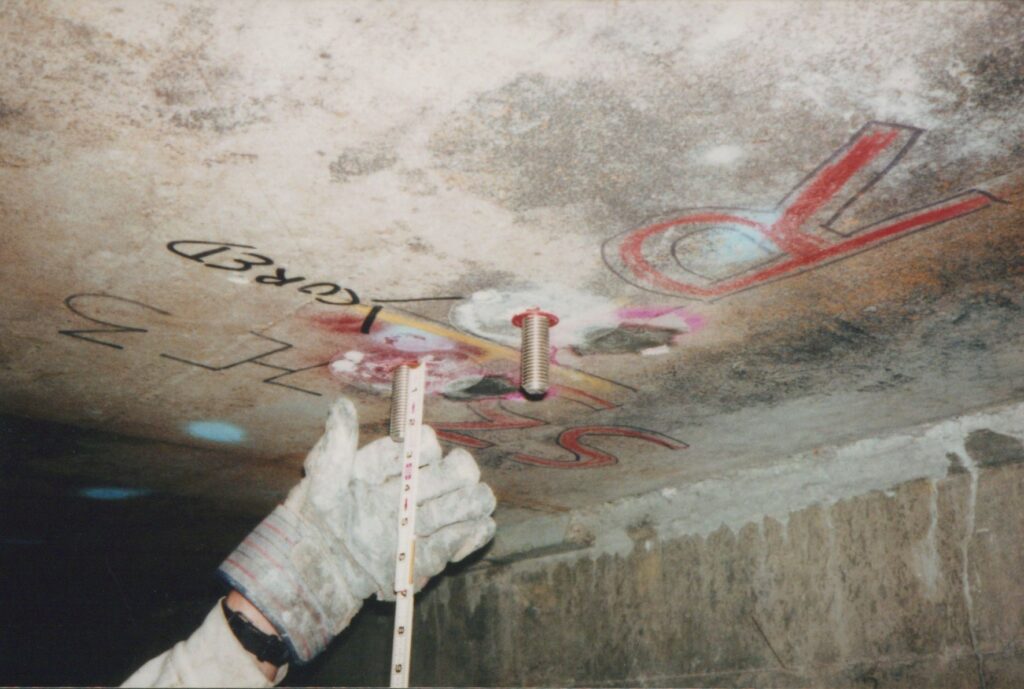
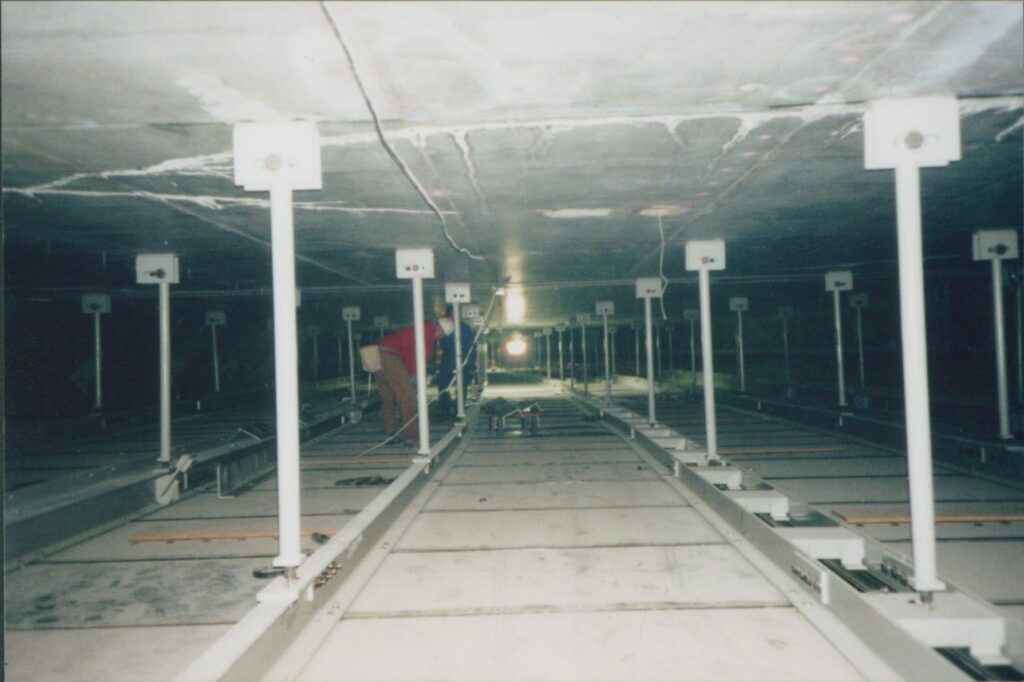
2006 Ceiling Collapse

A gloved hand holds a tape measure to a concrete ceiling, measuring the length of screws sticking down.
A worker stands in a crawlspace above the ceiling of a tunnel, surrounded by concrete and bars.


Reporting on the construction of the Big Dig included documenting tragedies. In 2006, a ceiling panel fell on a car in the Fort Point Channel Tunnel, killing a passenger and injuring the driver. Their family and the public wanted answers as to how the incident could have occurred. As a result, the Boston Globe undertook an in-depth investigation to report and provide answers. These photographs may have been taken to document the other ceiling panels in the rest of the tunnel after the accident occurred.

To learn more about accessing the Boston Globe Big Dig records, email the Northeastern University Archives and Special Collections at archives@northeastern.edu.

Aries Peralta (he/him) recently graduated from Simmons University with an MS in Library and Information Science with a concentration in archives management. He received his BA in history from the University of Connecticut.
Library Receives CPA Grant to Digitize “Black Art and Joy in Boston (and Beyond)”

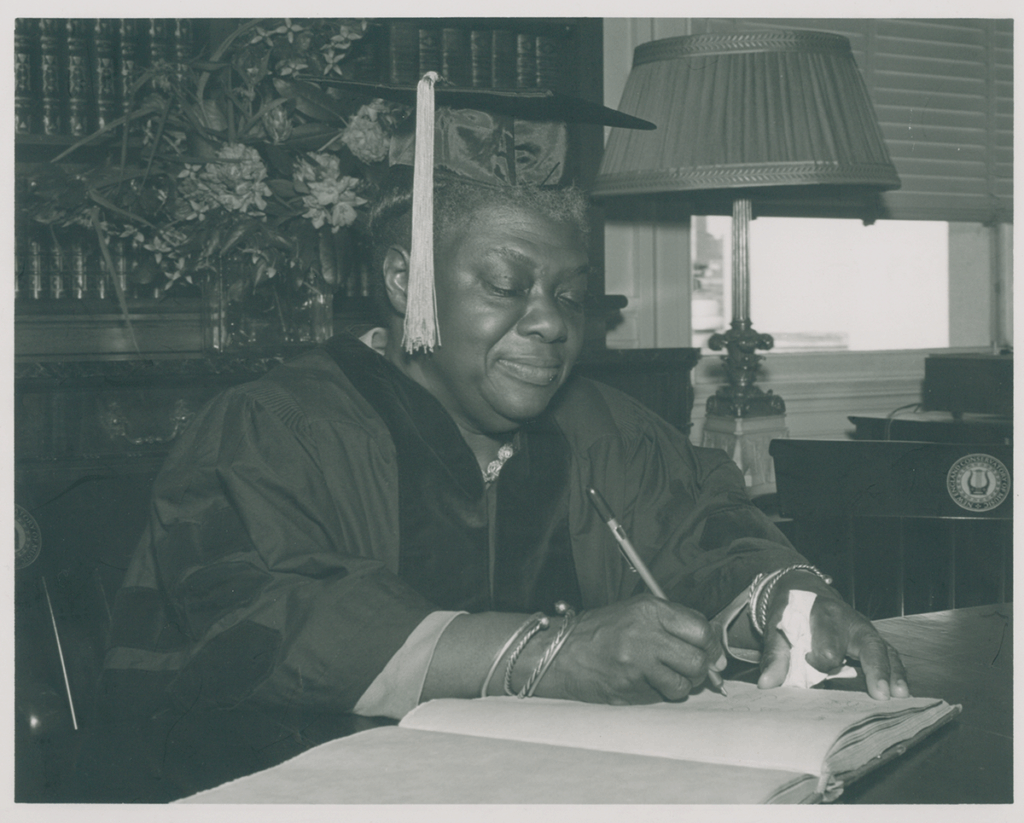
Black and white image of Elma Lewis writing at a desk while wearing a cap and gown
Elma Lewis at the New England Conservatory of Music where she was conferred an honorary degree in 1977

The Northeastern University Library is proud to announce that the Archives and Special Collections has been awarded a City of Boston Community Preservation Act (CPA) grant to fund the project Black Art and Joy in Boston (and Beyond): Elma Lewis and the National Center of Afro-American Artists. This grant of almost $460,000 will support the digitization, cataloging, and publication of primary source materials from four archival collections that document the extraordinary work of Elma Lewis (1921-2004) and the cultural institutions she founded.

Dan Cohen, Vice President for Information Collaboration and Dean of the Northeastern University Library, said, “The University Archives and Special Collections department carefully preserves and protects access to some of the deep history and stories of Boston’s Black community. This project will augment and complement their and the Library’s Digital Production team’s effort to digitize significant portions of the Freedom House’s historical collection. We are thrilled to partner with the City of Boston and the Community Preservation team on this project.”

Lewis was a transformative force who trained a full generation of African American dancers, singers, musicians, actors, and visual artists in Boston. She formed the Elma Lewis School of Fine Arts in 1950 and established the National Center of Afro-American Artists in 1968, along with its museum in 1969. Her outsized influence on the Black arts movement in Boston, and how her ideas and techniques spread nationally and internationally, represents a crucial chapter in the city’s cultural history.

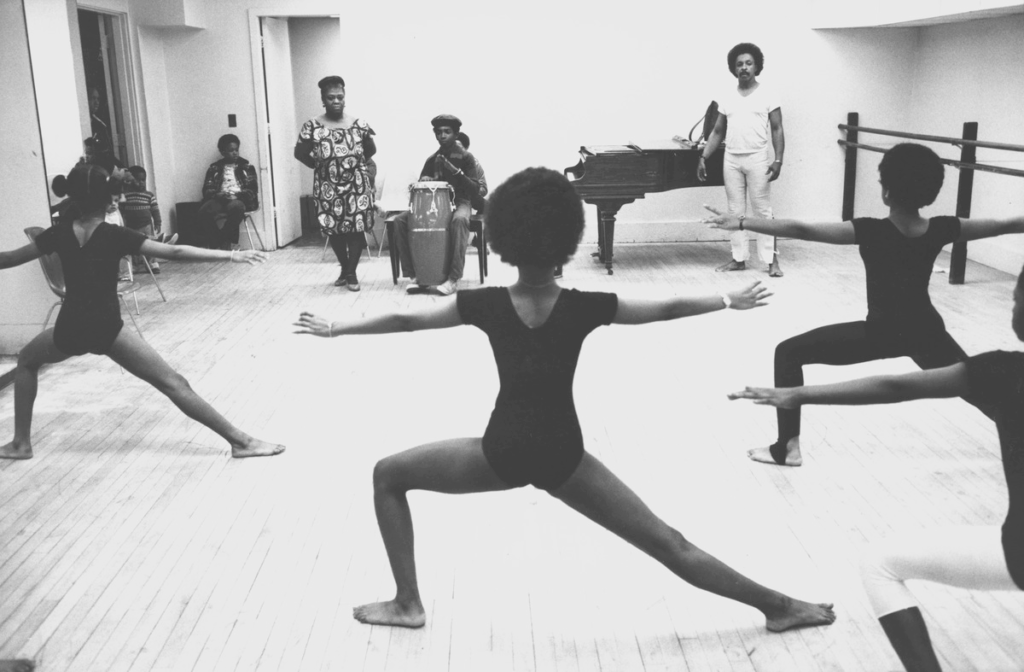
Black and white image of ballet dance class
A ballet class at the Elma Lewis School of Fine Arts, 1975
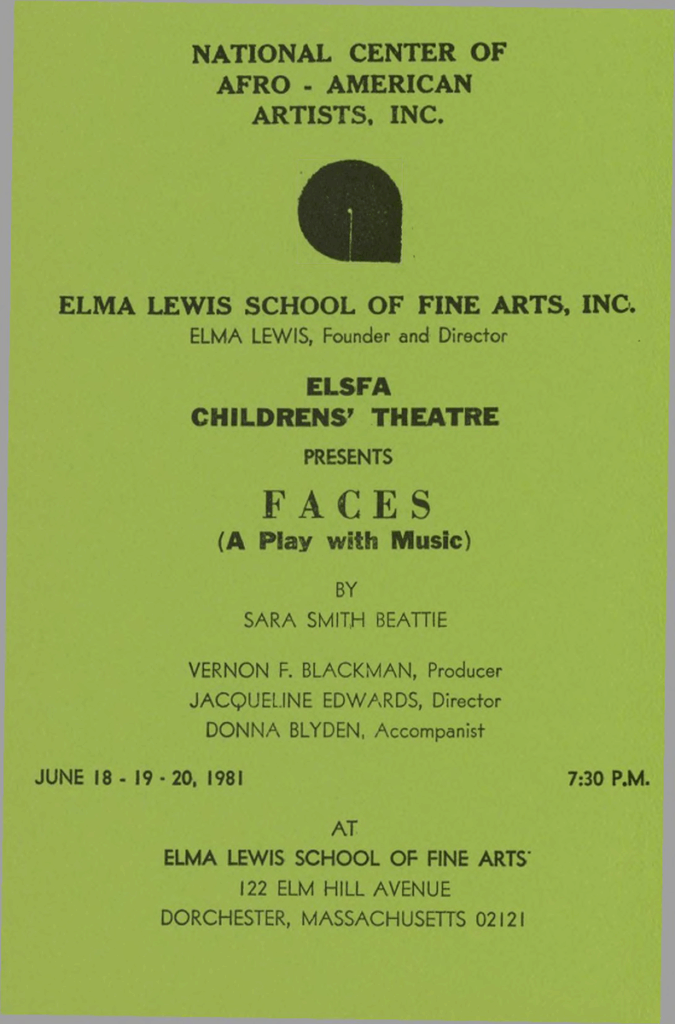
A green program for the Elma Lewis School of Fine Arts Children's Theatre presentation of FACES (A Play with Music)
A program for a children’s play at the Elma Lewis School of Fine Arts in 1981

This project amplifies the voices of those who were in Lewis’s orbit as teachers, collaborators, or students. It also highlights the influence of Afrocentric organizations on Boston, a necessary element to understanding Black civil rights work in the city and the rich network of organizations and individuals focused on community-building and empowerment.

The digitized collections will shed light on the decades of labor and coalition-building that are foundational to Boston’s existing Black arts infrastructure. By publishing them online, we make this history accessible to Bostonians at any time and for any purpose, while also reaching larger local and national audiences through participation in Digital Commonwealth and the Digital Public Library of America.

The curricular potential of this collection represents one of its most valuable forms of impact. The project will build on the successful Boston Public Schools Desegregation Collection, a collaboratively built collection of scanned archival materials documenting the desegregation of Boston’s public schools, in collaboration with the district itself. That project demonstrated how archival materials can be integrated into K-12 curriculum design, bringing primary source materials directly into classrooms across the city.

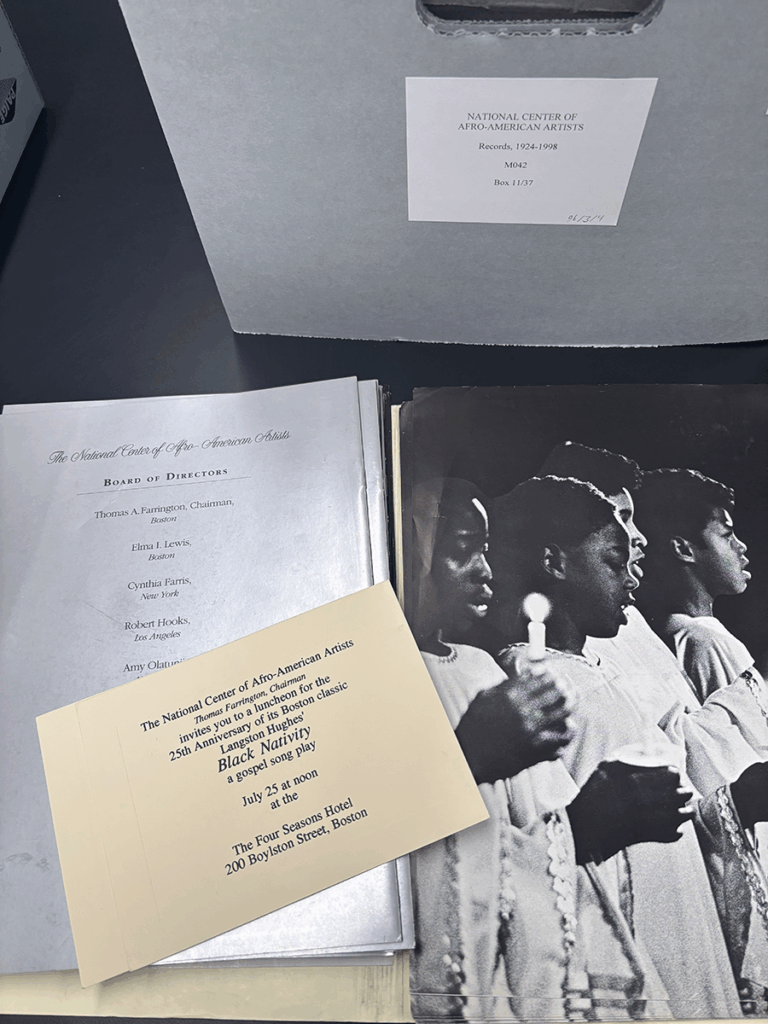
An archival box from the Elma Lewis collection, with a selection of photos and papers
A box of archival materials from National Center of Afro-American Artists records and some of its contents

These digital collections will enable Bostonians, including relatives and friends of those who appear in the collections, to access this evidence of their community’s rich cultural history. The materials will be freely available online, searchable, and integrated with our existing digital collections to provide a deeper and richer pool of resources illustrating the activities and accomplishments of Boston’s Black residents and leaders.

As we embark on this preservation effort, we honor not only Elma Lewis’s remarkable legacy but also the ongoing vitality of the Black arts movement in Boston that she helped establish. Through the CPA’s support, we ensure that future generations will have access to these invaluable records of creativity, resilience, and community building.

For more information about the project, please contact Giordana Mecagni at g.mecagni@northeastern.edu or 617-373-8318.

To learn more about what collections from Elma Lewis we hold, visit our research guide Finding Elma Lewis in the Northeastern University Archives and Special Collections.

This blog post was co-written by Giordana Mecagni, Head of Archives and Special Collections, and Molly Brown, Reference and Outreach Archivist.