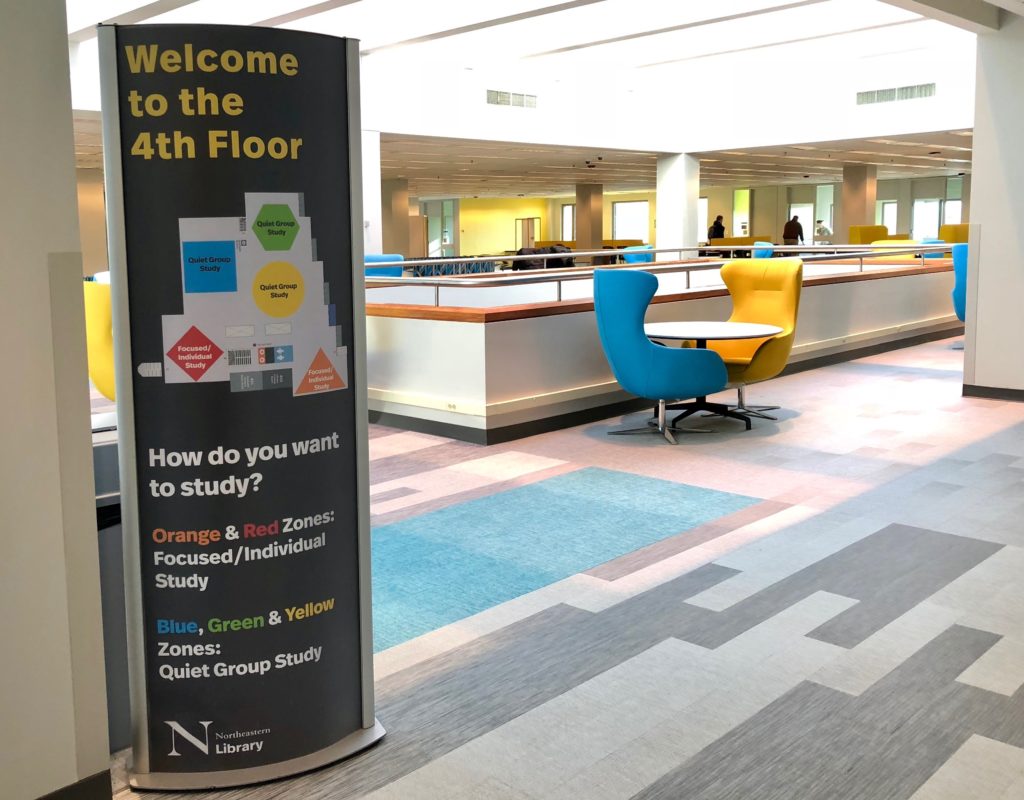
Have you been up to the 4th floor of Snell Library since the spring semester started? We’ve made some changes! Over the winter break, we refreshed all the furniture on the fourth floor, and some of the 3rd floor furniture as well. This is part of a continuing program of improvements to the library in response to changing user needs.
What’s Changed, and Why?
Much of the furniture previously on the 4th floor was in the building when it opened in 1990, and it showed. It was time to replace it with more modern furniture that can meet the needs of our current student body. For example, we’ve heard feedback from students that you wanted more standing-level workspaces, so you’ll see more of those on the 4th floor.
A lot of the new furniture also has built-in power — none of the previous furniture had power. We’ve arranged the furniture to maximize access to power, although we’re still working on getting everything connected to the electricity.
Snell Library sees more than 2 million visits a year — so, getting furniture that can withstand high usage as well as be cleaned or repaired easily was really important, too.
Zones for Quiet Study
Before this academic year, the 3rd floor was designated as a quiet study floor, and the 4th floor was a silent study floor. Last year, we freed up quite a bit of space in the building by moving some of our books to off-site storage and consolidating the remaining collection on the 3rd floor. As a result, the entire 4th floor is currently able to be used for study space. Even on the 3rd floor, there is more floor space now dedicated to seating.
The 3rd and 4th floors are now both considered quiet study floors, and the 4th floor is configured in zones that accommodate both quiet group study and silent individual study. So, there are places for study buddies to sit together, where it’s okay to whisper or talk quietly, as well as areas for you to work in solitude.
More Seats
When you come up to the 4th floor, it might look like there’s a lot of open space. Why not fill all that space in with furniture, so even more students can study? First, the fire code limits how many seats we can have on a floor, in order to keep occupancy at a safe level. Even if we didn’t have that limitation, keeping the furniture spaced out helps keep volume level reasonable for everyone using the floor.
With the furniture replacement, there are more seats on the 4th floor now than there were even last semester! We’ve increased seating by about 10 percent. And there’s now a wider array of functionality for a variety of uses.
Tell Us What You Think!
We’re planning to observe how the new furniture is used, as well as soliciting constructive feedback from students. We can use that information to rearrange furniture into configurations that might work better for folks. Beyond that, we’re always open to student input, and we definitely consider it seriously when planning any building or service changes. We want Snell Library to be an environment that is shaped by its users, from first-year students to faculty. Send us your feedback!